

Why Financial Data Privacy Suddenly Matters to Everyone
Over the last three years, financial data has turned из “бумажки в кошельке” into one of the hottest targets on the planet. Between 2022 and 2024, financial services have consistently ranked among the top three most‑attacked industries in reports from IBM and Verizon, with breach costs averaging around 6 million dollars per incident — noticeably higher than the cross‑industry average of about 4.5–4.9 million. At the same time, global digital payments volume passed 10 trillion dollars in 2023, and over two thirds of adults in many countries now use mobile banking at least once a week. More money is moving online, more devices are connected, and attackers are following the data. That’s why even if you’re “not a tech person”, you absolutely need at least a beginner‑level grasp of financial data privacy and security to avoid painful — and expensive — surprises.
If you’ve ever typed your card number into a random website and hoped for the best, this guide is for you.
Short Historical Background: From Bank Vaults to Cloud Servers
For most of the 20th century, “protecting money” meant thick walls, metal vaults, and armed guards. Your account information lived on paper files and closed mainframe systems that practically nobody outside the bank could touch. The big shift started in the 1990s with online banking and card payments at scale. By the early 2000s, large breaches began to hit the headlines: millions of card numbers leaked from retailers, banks, and payment processors. Regulators responded. In 2018, the EU’s GDPR set a global bar for handling personal data, including financial details, and in the US, sector‑specific rules like GLBA and state privacy laws tightened expectations. Between 2022 and 2024, we saw a new wave: attackers moved from smashing the “front door” to quietly abusing APIs, supply chains, and cloud misconfigurations, while banks raced to modernize old systems without breaking security.
So, in just one generation, the center of gravity moved from physical theft of cash to digital theft of data — and the rules are still catching up.
Basic Principles of Financial Data Privacy and Security
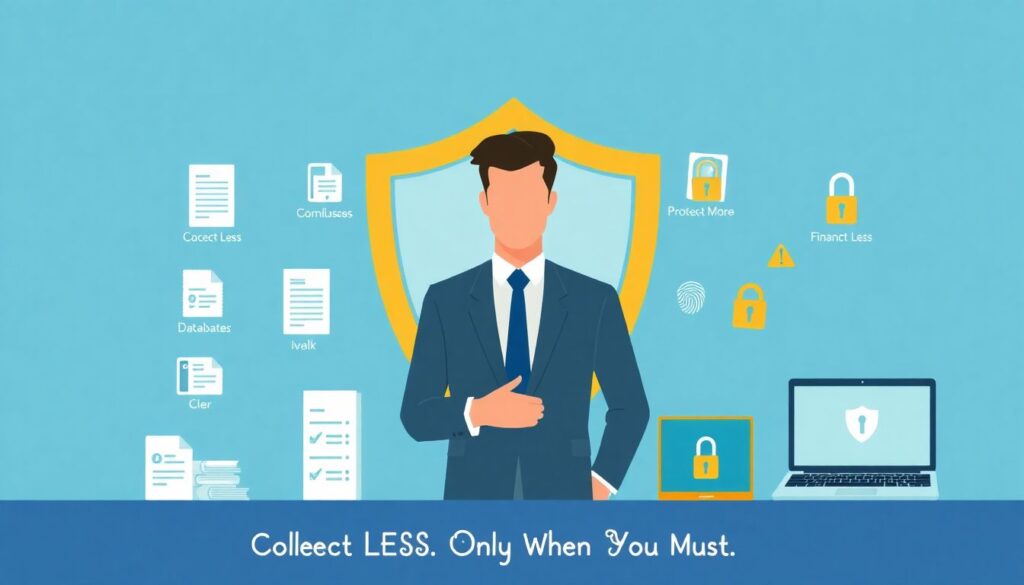
The foundation is simple to say and harder to do: collect less, protect more, and share only when you must. First, data minimization: if you’re a business, don’t hoard financial details “just in case”; anything you store, you must defend. Second, strong authentication: multi‑factor authentication (MFA) should be non‑negotiable for banking apps, business dashboards, and admin panels. Third, encryption: financial data should be encrypted both “in transit” (while it travels across the internet) and “at rest” (on disks and in backups). Fourth, access control: employees and systems should only see the minimum required to do their jobs — the classic “least privilege” rule. Finally, monitoring and response: assume that at some point something will go wrong, so you need alerts, logs, and a tested incident‑response plan to catch and contain problems quickly instead of discovering them months later via a panic‑inducing news article.
In plain language: limit what you store, lock it down, watch it carefully, and be ready for things to break.
How These Principles Apply to Regular People
On the personal side, the same ideas translate into concrete habits. Use unique, strong passwords and a password manager instead of reusing the same easy word everywhere. Turn on MFA for your bank, broker, and any financial app that supports it. Keep your phone and laptop updated — a lot of banking malware exploits already‑patched bugs. Be skeptical of links in emails and text messages, especially anything that says “urgent” or “your account will be closed today”; phishing is still the number‑one way attackers get access to accounts. Finally, regularly review statements and app notifications. From 2022 to 2024, many banks reported that early detection by customers was one of the fastest ways to stop fraud before it snowballed into bigger losses.
If something looks off, contact your bank using the official number from their website or app, not the one in a suspicious message.
What Businesses Need to Know: From Basics to Services

If you run a company — even a tiny online shop — you’re now part of the financial data ecosystem. That means you’re expected to protect card details, transaction records, and sometimes bank data of both customers and employees. Over the past three years, regulators have steadily raised expectations, and customers have become more willing to walk away from brands linked to data breaches; several surveys since 2022 suggest that over 70% of consumers lose trust in a company that mishandles their financial information. For smaller firms, “do it all yourself” security is unrealistic, which is why financial data protection services for businesses have grown so quickly. These services bundle things like tokenization (storing surrogate values instead of real card numbers), secure payment gateways, continuous monitoring, and compliance‑ready reporting, so you don’t have to reinvent the wheel or misconfigure it at 2 a.m.
You’re not expected to become a cybersecurity engineer — but you are expected to choose partners and tools that take security seriously.
Financial Institutions and Advanced Cybersecurity
Banks, fintechs, and insurers live under much heavier fire. According to multiple industry reports between 2022 and 2024, financial institutions see more targeted attacks per week than most other sectors, including ransomware, credential stuffing, and API abuse against mobile apps. The best cybersecurity solutions for financial institutions now blend several layers: behavioral analytics that spot unusual account movements, AI‑driven fraud detection, hardware‑backed security on mobile devices, and strict governance over who can deploy code or change configurations. Many also outsource parts of their defense to managed security services for financial data, where a specialist provider runs 24/7 monitoring, threat hunting, and incident response. This doesn’t remove responsibility from the institution, but it does bring in expertise and scale that an in‑house team alone may not achieve, especially when attackers operate globally and around the clock.
Underneath all the buzzwords, the goal is very concrete: stop unauthorized access quickly enough that stolen data never becomes stolen money.
Real‑World Examples: What Implementation Looks Like
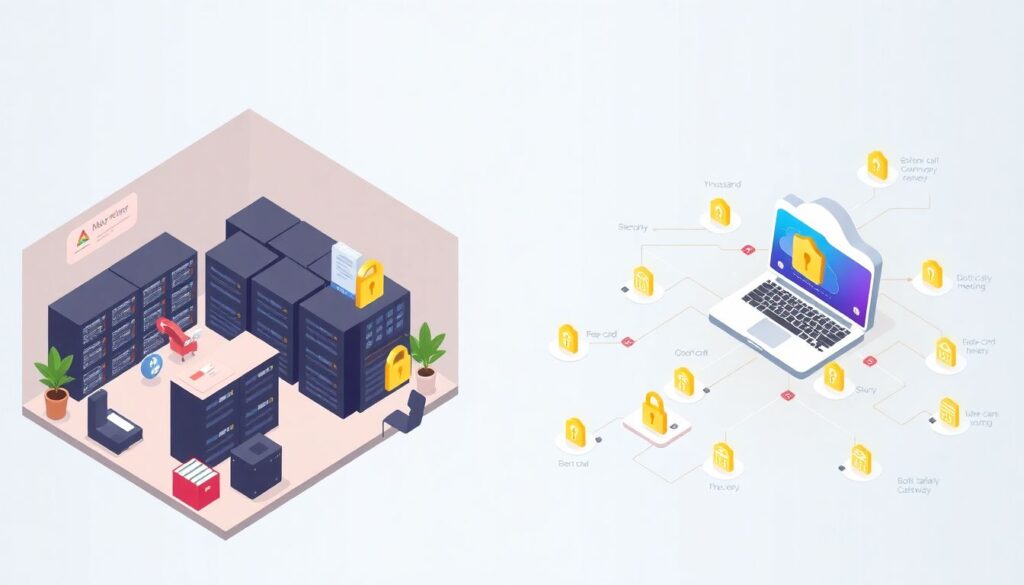
Let’s make this more tangible. Picture a mid‑size e‑commerce brand that processes thousands of card payments every day. A few years ago, they might have stored card numbers on their own servers, relying on simple database passwords and hoping for the best. Now, a more mature setup routes all payments through a PCI‑compliant gateway, tokenizes card data so the store never actually holds raw card numbers, and uses role‑based access so only a handful of staff can touch the most sensitive reports. Logs stream into a centralized system with automatic alerts for strange behavior, like a sudden export of all transactions at 3 a.m. On top of that, the company deploys financial data privacy compliance software to track where financial data lives, apply retention policies, and generate reports that satisfy regulators. Over 2022–2024, tools like this have become far more user‑friendly, which lowers the barrier for non‑technical teams.
From a customer’s perspective, this might just look like a smoother checkout and fewer awkward “we’re writing to inform you of a data incident” emails.
Everyday Example: A Safer Banking Routine
Now shift to your daily life. Learning how to secure online banking and personal financial data doesn’t require a computer science degree; it’s more about disciplined routines. In 2023 and 2024, a large share of account takeovers came from simple phishing or reused passwords, not Hollywood‑style hacks. So you set up MFA, store passwords in a reputable manager, and enable login alerts. You make sure your banking app is downloaded from the official store and updated. When traveling, you avoid logging into your bank from random café Wi‑Fi without a VPN. Once a week, you glance over your latest transactions; once a month, you review bigger patterns. These are boring habits, which is exactly what you want — boring, repeatable, low‑effort moves that quietly reduce your risk by a huge margin over time.
Think of it like locking your front door: it doesn’t stop every possible burglar, but it makes you a much harder target than someone who leaves everything wide open.
Common Misconceptions You Should Drop Today
A few myths keep people and companies exposed. First, “I’m too small to be targeted.” Automated attacks don’t care about your brand; they scan the internet for any weak system, and small businesses are often easier to breach. Second, “My bank will just refund everything.” In reality, depending on your country and the type of fraud, you may still lose money or spend months in administrative limbo. Third, “We bought a fancy security tool, so we’re covered.” Tools without good configuration, training, and processes are like gym memberships you never use. Finally, “Compliance equals security.” Passing an audit or ticking boxes for a standard is just a baseline. The last few years are full of examples where compliant organizations were still breached because attackers exploited gaps between formal rules and messy reality.
In short, treat compliance, tools, and insurance as safety nets — not as excuses to ignore basic hygiene and continuous improvement.
Where to Start as a Beginner
If you’re just starting, keep it simple and focused. As an individual, enable MFA, use a password manager, and regularly review your accounts. As a business owner, offload as much sensitive handling as possible to reputable providers, ask pointed questions about their security posture, and schedule at least an annual review of your setup. For both, stay lightly informed: glance at major breach news not for drama, but to ask, “Could this happen to me, and what one thing could I do this month to lower the odds?” Financial data privacy and security aren’t one‑time projects; they’re ongoing habits that get easier as they become routine. If you build those habits now, the increasingly digital, connected financial world of the next decade will feel far less intimidating — and far safer — than the headlines might suggest.
Комментарии