
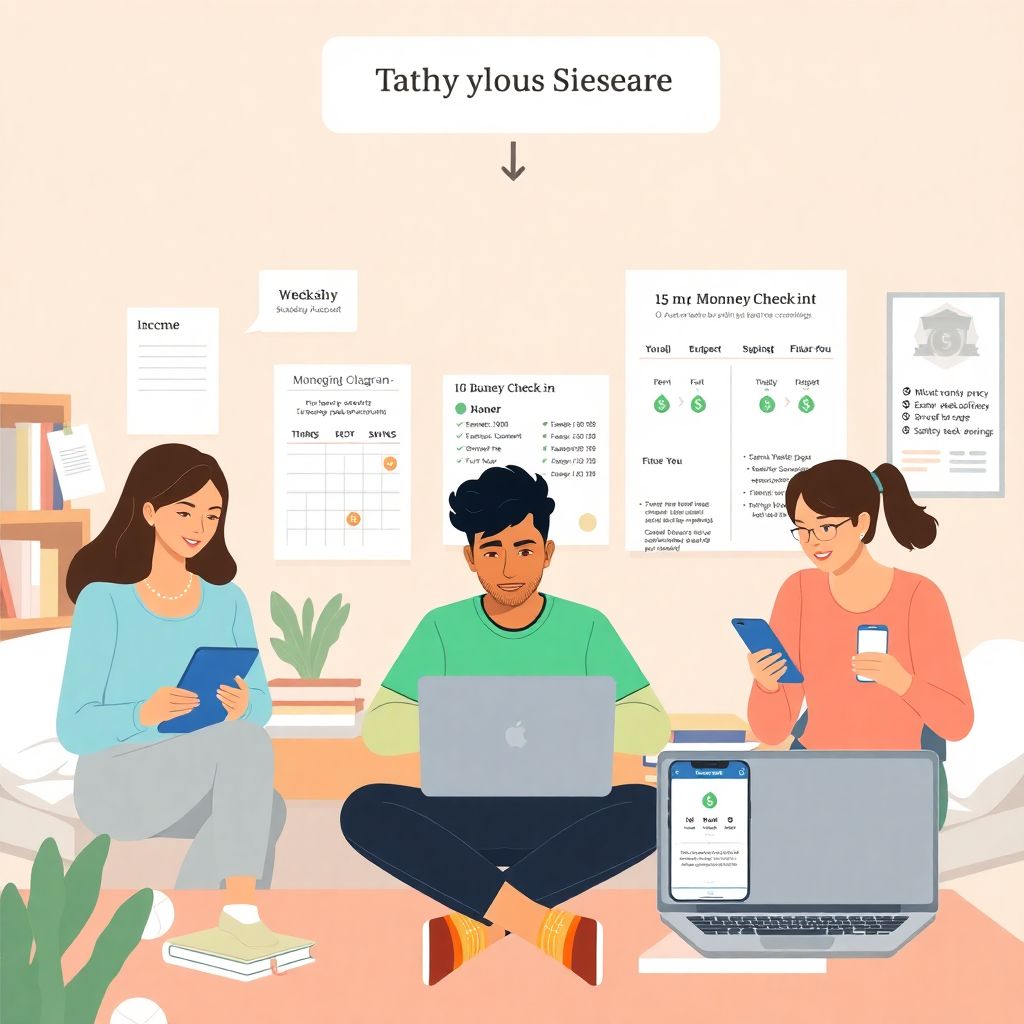
Why Busy Students Need a Simple Money Routine
Most students don’t need a complicated financial plan; they need a repeatable money routine that survives exams, group projects and part‑time jobs. A personal finance routine is a set of small, scheduled actions you repeat every week and month: checking balances, sorting expenses, paying bills, and adjusting goals. Think of it like a workout plan for your wallet. Instead of reacting when the account is almost empty, you create a predictable flow: money comes in, you decide its job, and then you let automation do most of the work. The trick is building a system that takes 15–20 minutes a week, tops, and still protects you from overdrafts, late fees and random “how is my card declined again?” moments.
Key Terms You’ll Actually Use
Before we go deeper, let’s clarify a few words you’ll see a lot. A budget is a plan for how you’ll use future money; it’s not a list of past spending, that’s a spending log. Cash flow is the motion of money in (income) and out (expenses) of your accounts. An emergency fund is savings you do not touch unless life hits you with something urgent and unexpected, like a medical bill or a dead laptop in mid‑semester. Net worth is what you own (cash, savings, investments) minus what you owe (loans, credit cards). A credit score is a number that sums up how reliably you handle debt; future landlords, banks and sometimes employers will care about it more than you expect.
Designing a Weekly 15‑Minute Money Check‑In
Your routine lives or dies by the weekly check‑in. Block 15 minutes on the same day each week, ideally when your brain is not fried: Sunday afternoon, Friday morning, whatever fits. In those 15 minutes you’ll open your banking app, your budgeting tool and your calendar. You’ll confirm how much came in, how much went out, and which bills or subscriptions are coming within the next two weeks. This is also when you tweak your budget categories if you overspent or underspent somewhere. The goal isn’t perfection; the goal is awareness in real time so you can adjust before you’re in trouble. Over a semester, this tiny ritual builds control, just like regular workouts quietly build strength.
Visualizing the Flow of Your Money
Use a simple mental diagram to keep your routine clear:
[Diagram: “Income” arrow → “Checking Account” box → three arrows out to “Essentials”, “Fun Money”, “Future You (savings, debt)”].
Every paycheck or stipend lands in checking. A percentage automatically moves to essentials (rent, food, transport), a smaller slice goes to fun spending, and the rest flows into “future you” buckets like your emergency fund or extra loan payments. If you like visuals, sketch this flow on paper and pin it near your desk. When you feel like impulse‑buying something at 2 a.m., picture which arrow you’re stealing from: are you borrowing from rent, from fun money, or from future you?
Choosing Tools: Apps, Spreadsheets and Old‑School Methods
You don’t need fancy tech, but the right tools can save you time. Many students start with a basic spreadsheet because it’s free, customizable and works offline. However, spreadsheets rely on manual updates, which busy students often forget. That’s why the best budgeting apps for college students automatically sync with your accounts, categorize transactions and remind you about upcoming bills. Compared with the classic “envelope method” (physical cash divided into categories), apps are more realistic in a cashless campus environment and easier to manage when you’re splitting rent or groceries with roommates. The trade‑off is privacy and learning curve: apps may share anonymized data, and you’ll need a week or two to get comfortable with their categories and alerts.
Building a Budget Around Your Real Life
Instead of starting with a generic 50/30/20 rule, reverse‑engineer your budget from your actual semester. [Diagram: “Semester Timeline” line with spikes labeled “textbooks”, “travel home”, “exam weeks coffee surge”]. Mark on a calendar when big, non‑monthly costs hit: textbooks, club fees, trips home, application fees. Then spread those costs out: if you’ll need $300 for travel in three months, set aside $25 a week starting now. This turns “huge, scary expense” into “small, boring transfer”. Keep core categories: housing, food, transport, phone, school costs, health, fun, savings and debt. Revisit them monthly; first‑year students usually underestimate food and random campus expenses, then adjust after seeing a couple of months of real numbers.
Smart Banking for Students: Cutting Friction and Fees

Your bank setup either supports your routine or constantly sabotages it. Look for student bank accounts with no fees, free ATM access near campus and solid mobile apps. A separate savings account at the same bank simplifies automatic transfers and keeps your emergency fund a bit out of sight, which helps you not raid it for late‑night takeout. Compare this with using only one catch‑all checking account: technically simpler, but it blurs the line between “money available to spend” and “money already assigned to rent or savings”. Many digital‑first banks now offer instant notifications after each transaction; that real‑time feedback acts like a mini budget coach, nudging you to notice patterns before they snowball.
Starting Credit the Right Way in College
Used carefully, credit is a tool, not a trap. Getting one of the credit cards for college students with rewards can help you build a credit history while earning small perks like cashback on groceries or streaming services. The crucial rule: treat the card like a debit card with a delay—only charge what you already have in your checking account, and pay the full statement balance every month. Compared to using only debit, a credit card adds fraud protection and builds your credit score, which later affects apartment approvals and loan interest rates. The downside is obvious: if you start carrying a balance, interest piles up fast, and rewards become meaningless. Automation helps here too—set an automatic full payment on the due date.
Student Loans and Future‑You Planning
Even if repayment feels far away, your routine should include awareness of your student debt. Log into your loan portals once a semester and note current balances, interest rates and whether they’re federal or private. [Diagram: “Loan List” with arrows to “interest rate”, “monthly payment”, “due date after graduation”]. Understanding the basics now makes it far less overwhelming later when you think about how to consolidate student loan debt or whether refinancing makes sense. Federal loans often come with income‑driven repayment and forgiveness options, while private loans may offer fewer protections but sometimes lower rates. Being clear on what you’re signing each year keeps you from graduating with “surprise” loans you forgot you accepted during a rushed registration window.
Learning on the Go: Courses, Content and Habits

If money topics still feel like a foreign language, you’re not stuck. There are plenty of online courses for personal finance for students that break things into short lessons you can watch between classes. Compared with random TikTok advice, structured courses are more likely to be accurate and to cover unsexy but crucial topics like insurance, taxes and long‑term investing. Supplement that with a couple of solid books or podcasts and you’ve basically built a mini‑degree in “Adulting With Money”. The key is consistency: 10 minutes of learning a day plus your weekly money check‑in will outperform a one‑time weekend binge of finance content that you never apply in real life.
Where Student Finance Is Heading After 2025
By 2030, your money routine will probably plug into tools that are even more automated and personalized than what we see in 2025. Expect banking and budgeting apps to merge into “financial autopilots” that analyze your patterns and suggest micro‑adjustments in real time, not just show you charts. Imagine your app warning you that this month’s food spending trend will break your travel savings target and offering one‑tap fixes like shifting categories or pausing a subscription. Universities are already adding personal finance modules into orientation and general‑education classes; that trend should grow, with more campuses requiring basic money training before you can accept loans. AI‑based coaches will nudge you toward better decisions, but your routines—those weekly and monthly habits—will still be the backbone. Tech can highlight the path, yet you’re the one who decides where each dollar goes.
Putting It All Together, One Small Routine at a Time

You don’t need to fix everything this week. Start with the simplest version: open a fee‑free student account, pick one budgeting tool, schedule a weekly 15‑minute check‑in, and set up one automatic transfer toward savings. As that becomes effortless, layer on the next piece, like tracking loans or using a starter credit card responsibly. Over a few semesters, this routine quietly turns chaos into a system. Future you—graduating, job‑hunting, moving cities—will still have stress, but money will be one less unpredictable thing to panic about. That’s the real win of a personal finance routine for busy students: not perfection, just steady control in the middle of a hectic life.
Комментарии