
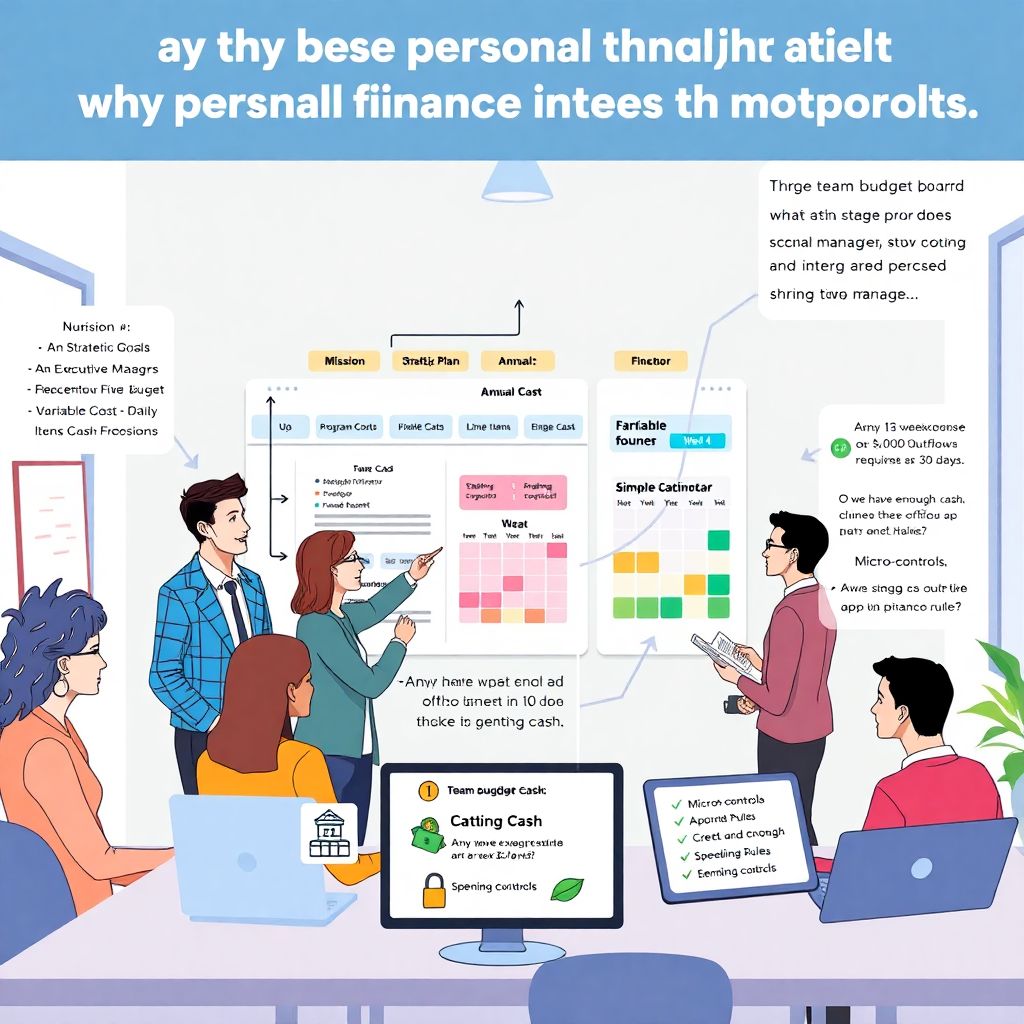
Why “Personal” Finance Matters Inside Nonprofits
When people hear “personal finance”, they usually think about families, mortgages and retirement plans, not grant‑funded teams and community programs. Yet inside every organization there are always real people making daily money decisions: program leads approving expenses, managers signing vendor contracts, and executive directors juggling payroll with uncertain grant timelines. That is precisely where nonprofit personal finance management starts to look a lot like household budgeting, just with extra zeroes and tighter rules. Over the last three years this pressure has only increased: according to Giving USA, total charitable giving in the U.S. fell about 3.4% in 2022 in inflation‑adjusted terms, then partly recovered in 2023, while costs for rent, insurance and salaries kept climbing. In this environment, individual choices by staff can easily be the difference between a stable year and an emergency board meeting about cash shortages.
The Big Picture: From Mission to Money Decisions
A nonprofit’s mission sounds lofty on paper, but its daily life is full of small, very personal money choices. Should a program manager authorize a last‑minute trip to a conference? Does a team lead hire a contractor, or train a volunteer instead? These choices can feel tactical, but in aggregate they create your real financial strategy. Recent surveys by the Nonprofit Finance Fund show that around half of U.S. nonprofits regularly operate with less than three months of cash on hand, a pattern that barely improved between 2021 and 2023 despite pandemic‑era relief funds. When everyone treats the budget like “someone else’s job”, risk multiplies. Turning basic financial literacy into a shared skill set means your mission is no longer hostage to one overworked finance director or a single major grant; it becomes a system where each person knows the financial guardrails and feels responsible for staying within them.
Technical Detail: Linking Mission to Money
“`text
Mission → Strategic goals → Annual plan → Program budgets → Line items → Daily decisions
Ask of every major expense:
1. Does it clearly advance a current strategic goal?
2. Is it funded by unrestricted or restricted money?
3. What is the impact on cash in the next 90 days?
4. Who will be accountable for results from this spending?
“`
Personal Budgets Inside an Organizational Budget
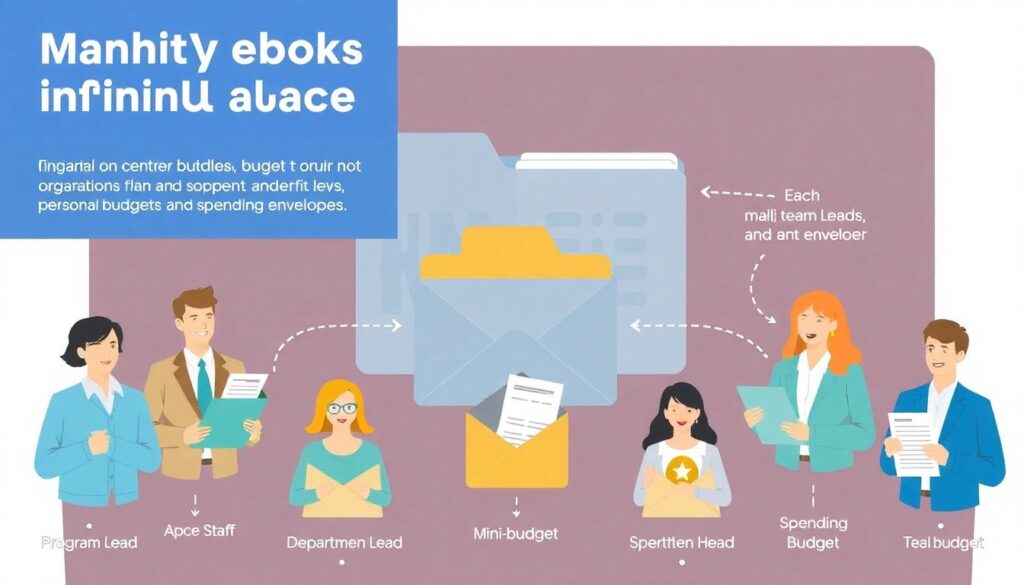
For staff who are not accountants, the easiest entry point into financial planning services for nonprofits is the idea of “mini‑budgets” or spending envelopes tied to specific teams or roles. Think of each program lead or department head as having a personal budget within the larger organizational plan. They do not need to master FASB standards, but they should understand how much flexible money they control, which costs are fixed, and what trade‑offs are possible. From 2022 to 2024, salary and benefit costs in many nonprofit‑heavy sectors (healthcare, human services, education) grew faster than general inflation, often 4–6% per year, according to U.S. Bureau of Labor Statistics data. Without decentralized budget awareness, staff keep requesting “what we had last year” plus small additions, even when the core cost structure has quietly become unsustainable. Teaching each budget owner to think a bit like a household manager—“If I add this, what must I cut?”—turns abstract spreadsheets into concrete choices that people can actually act on.
Technical Detail: Simple Team Budget Template
“`text
For each team or program:
– Annual budget: total, plus how much is truly flexible
– Fixed commitments: salaries, rent share, core software
– Variable costs: events, travel, printing, consultants
– Quarterly cash forecast: when big payments hit
– Personal rules: e.g., “Any expense over $1,000 requires a second look”
“`
Cash Flow: The Nonprofit Version of “Do I Have Enough This Month?”
If personal finance is about making sure you can pay your bills on time, nonprofit budgeting and cash flow strategies are just the institutional version of not bouncing checks. Grants are often reimbursable, major donations cluster at year‑end, and government contracts can be paid 60–90 days late. Data from the Nonprofit Finance Fund’s State of the Sector surveys consistently show that late payments from funders are one of the top operational headaches, with a noticeable spike again in 2022–2023 as public agencies struggled with staffing and backlogs. For a staff member approving an invoice, this reality should translate into a simple question: “Do we actually have the cash to pay this in the next 30 days, or are we assuming future income?” Teaching managers to read a rolling 13‑week cash forecast, the same way a household would watch its checking account balance, dramatically cuts panicked calls to the bank and reduces the temptation to delay payroll taxes or vendor bills, both of which can quickly spiral into crises.
Technical Detail: 13‑Week Cash Flow for Non‑Finance Staff
“`text
Columns: Week 1–13
Rows:
– Starting cash
– Expected inflows this week (by source)
– Expected outflows this week (by category)
– Ending cash (starting + inflows – outflows)
Key staff habit:
Review once a week for 15 minutes.
Ask: “What changed? What can we delay or accelerate?”
“`
Personal Spending Rules: Micro‑Policies That Actually Work
Every nonprofit has a 20‑page financial policy document that almost no one reads. What really shapes behavior are the simple, personal rules managers carry in their heads. The art of nonprofit personal finance management is turning those implicit habits into explicit, shared guardrails. Over the past three years, internal fraud and misuse of funds in nonprofits have made headlines not because the amounts were enormous, but because controls were informal and centered on trust instead of process. Sector watchdogs like Charity Navigator and state attorneys general continue to remind boards that “trust” should be supported by verification. Concretely, that means setting personal limits: for instance, no staff member can both approve and pay an invoice; any purchase over a certain threshold needs at least two sets of eyes; and credit cards are never shared even “just this once”. When these are framed as personal habits rather than bureaucratic obstacles, staff are more likely to apply them consistently, even on busy days.
Technical Detail: Practical Micro‑Controls
“`text
– Segregation of duties: different people request, approve, and pay.
– Thresholds: e.g., expenses > $2,500 require director + finance sign-off.
– Documentation: receipt or contract attached to every payment.
– Monthly review: card holders check and sign their own statements.
“`
Tools That Feel Like Personal Apps, Not Punishment
Nonprofit staff increasingly expect their work tools to be as intuitive as personal banking apps. That expectation can be an asset if you choose systems that support good behavior instead of fighting it. The best accounting software for nonprofits today borrows from consumer fintech: clear dashboards, mobile receipt capture, and automated alerts when a budget line is close to overspending. According to tech adoption surveys from 2022–2024, cloud‑based accounting and donation platforms gained strong ground, with many smaller organizations finally moving off desktop spreadsheets after the pandemic proved how fragile single‑computer systems were. When you show a program lead a simple screen with “Budget vs. Actuals” in real time, they start to treat it like a household budget tracker: a live indicator that guides decisions, not a historical report delivered three months too late. The more these tools resemble what people already use for their own money, the faster financial discipline becomes a normal part of everyone’s workflow.
Technical Detail: Features to Prioritize in Finance Tools
“`text
Look for:
– True fund accounting (track restricted vs. unrestricted money)
– Role-based access (everyone sees what they need, not everything)
– Mobile expense capture and approval
– Simple budget dashboards for non-finance staff
– Integrations with payroll and donation platforms
“`
Building Financial Literacy as a Core Staff Skill

You can’t expect thoughtful money decisions from people who are terrified of numbers. That is where nonprofit financial literacy training programs come in—not as one‑off workshops, but as an ongoing part of staff development. From 2021 to 2023, multiple sector surveys (e.g., from BoardSource and the National Council of Nonprofits) pointed to finance and fundraising as the two areas where executive directors felt both most responsible and least prepared. Instead of hoarding that anxiety at the top, smart organizations invest in short, practice‑oriented sessions: reading a basic financial statement, understanding the difference between cash and accrual, or spotting early warning signs of trouble. When staff realize that they do not need to become CPAs to contribute meaningfully, participation jumps. Over time, the culture shifts from “I don’t do numbers” to “I know enough to ask good questions”, which is exactly the skill level a resilient nonprofit needs from its non‑finance managers.
Technical Detail: Minimal Literacy Curriculum for All Staff
“`text
Four 60–90 minute modules:
1. How our organization earns, spends, and saves money.
2. Reading a budget and a simple income statement.
3. Cash flow vs. budget: why timing matters.
4. Your role-specific financial responsibilities and limits.
“`
Scenario: A 15‑Person Nonprofit That Almost Ran Out of Cash
Consider a small advocacy nonprofit with about 15 employees. In 2022, they won a large two‑year government grant that doubled their budget. Staff celebrated, programs expanded, and hiring followed. No one fully absorbed the fine print: reimbursements could take up to 90 days, and the grant prohibited using funds for certain overhead costs. By mid‑2023, they looked wealthy on paper but were quietly using a line of credit to cover payroll. The executive director spent nights worrying about cash, while program managers kept committing to new events assuming “the grant covers it”. In early 2024 they finally brought in outside financial planning services for nonprofits, which started not with a new spreadsheet, but with a series of short workshops for all managers. People learned to read the cash forecast, understood restricted vs. unrestricted income, and agreed on specific spending rules. Within six months they shortened payment cycles, tightened approvals on travel and consulting, and deliberately built a two‑month operating reserve. The grant amount stayed the same; only daily decisions changed.
Connecting Staff Personal Habits and Organizational Health

There is a deeper link between how people manage their own money and how they treat organizational funds. Staff who are constantly stressed about their personal bills are more likely to ignore long‑term budget impacts or chase short‑term fixes, even unconsciously. Conversely, teams that feel some personal financial stability often bring that mindset into work: they think ahead, compare options, and ask about downstream consequences. Over the last three years, high inflation and rising interest rates have made personal finances harder for many nonprofit workers; multiple workforce studies show real wages in many service nonprofits barely keeping up. As an employer, you cannot fix every staff member’s personal situation, but you can offer basic education, fair pay policies, and clear benefits explanations. When an organization normalizes open, shame‑free conversations about money—both personal and institutional—staff are less likely to hide problems until they explode, and more inclined to propose frugal, realistic solutions that support the mission without burning everyone out.
Putting It All Together: A 90‑Day Action Plan
To move from theory to practice, treat financial culture change as a short project, not an abstract aspiration. In the first 30 days, map out who actually makes spending decisions and what tools they have; you may be surprised how many approvals are informal emails or hallway nods. In days 31–60, introduce a simple, visual 13‑week cash forecast and share it with all managers, inviting them to connect upcoming program choices to real cash timing. During days 61–90, launch a basic literacy series and refine your internal rules into short, human‑readable checklists that fit on a single page. Along the way, keep emphasizing that the goal is not to turn everyone into accountants, but to help every staff member make mission‑aligned money choices with the same care they would use for their own household finances. Done well, nonprofit personal finance management stops being a source of fear or confusion and becomes a quiet strength—a set of habits that keep the lights on, the team paid, and the mission moving forward, even when the external funding environment is choppy.