
Why Budgeting a Cross‑Country Move Feels So Hard (And How to Fix It)
Moving across the country is basically a logistics project wearing sweatpants. You’re juggling money, timing, emotions, and a ton of cardboard. The problem: most people treat it like a weekend road trip and wildly underestimate the cost.
Let’s break down how to budget for a move across country step by step, talk about what everything really means, and walk through the mistakes that almost everyone makes the first time.
—
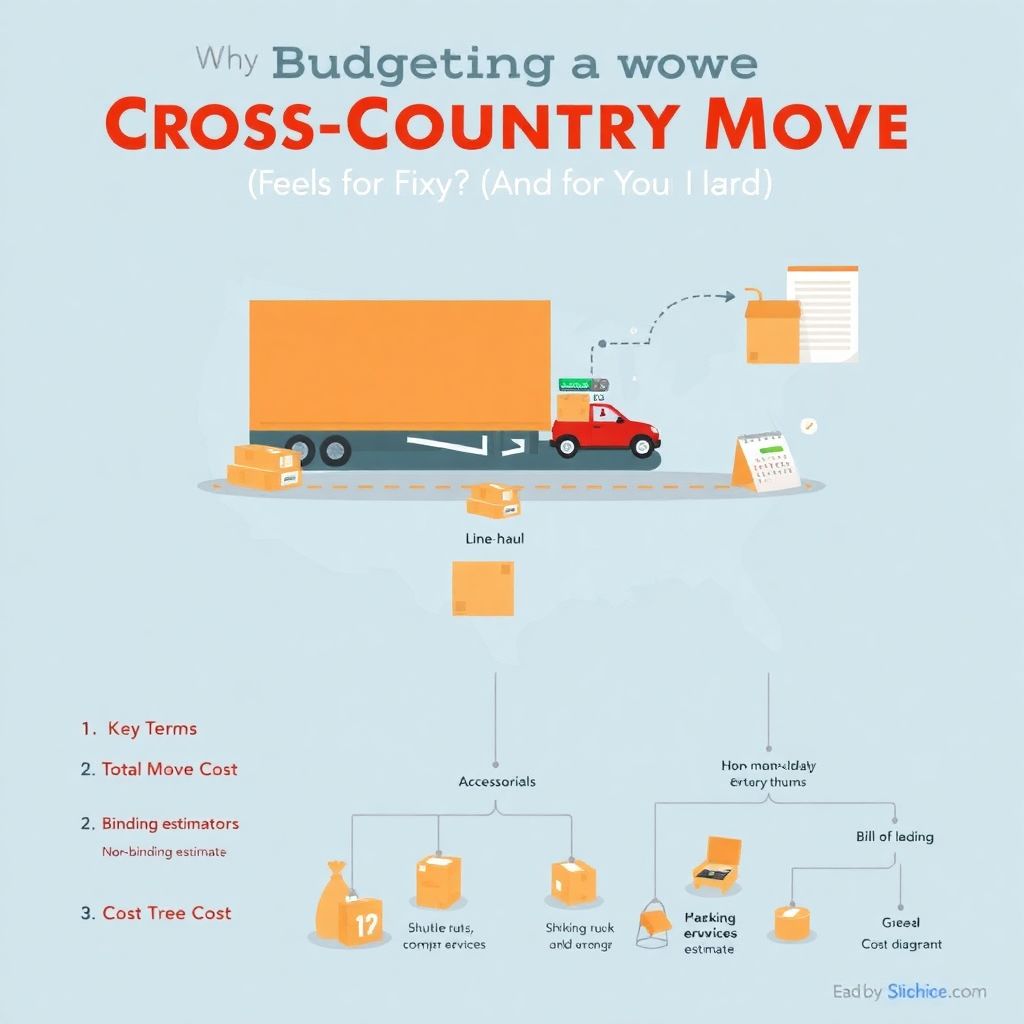
Key Terms You Actually Need to Understand
“Line‑haul”, “Accessorials”, and Other Words Movers Love
Before you can make a realistic long distance moving cost estimate, you need to decode the language on the quotes.
– Line‑haul charge – the base fee for hauling your stuff from Point A to Point B, usually based on distance and weight (or sometimes volume).
– Accessorial charges – all the “extras” that show up later:
– stairs or elevator fees
– long carry (when the truck can’t park close)
– shuttle service (a smaller truck when a big one can’t access your street)
– packing/unpacking services
– storage and storage‑in‑transit
– Binding estimate – a written quote where the mover agrees to the final price *based on a detailed inventory*. If nothing changes, they can’t legally raise it.
– Non‑binding estimate – a quote that’s really a rough guess. The actual price can be higher once they weigh your shipment.
– Bill of lading – the official contract between you and the mover. Boring document, massive consequences.
Common beginner mistake:
People glance at the “estimated total” on a quote, ignore the list of accessorials, and then feel scammed when the final bill is 30–40% higher. The text was there; it just wasn’t decoded.
—
Visualizing Your Costs as a Simple Diagram
Use this mental diagram whenever you look at a quote:
“`
Total Move Cost
│
├── 1. Transportation (line-haul)
│
├── 2. Services
│ ├── Packing
│ ├── Unpacking
│ ├── Appliance handling
│ └── Furniture assembly
│
├── 3. Accessorials
│ ├── Stairs / elevator
│ ├── Long carry
│ ├── Shuttle truck
│ └── Parking permits
│
└── 4. Extras
├── Insurance / valuation
├── Storage
└── Travel (gas, hotels, food)
“`
If any quote doesn’t clearly tell you what’s in each “branch” of this tree, assume surprises later.
—
Step‑By‑Step: Building a Realistic Moving Budget
1. Decide Your Moving Model First, Not Last
Most people jump straight into googling cross country moving companies and asking for prices. That’s backward. First choose *how* you want to move:
1. Full‑service move – Movers do almost everything: loading, transporting, unloading, often packing.
2. Hybrid move – You pack; they load and drive. Or you use a container, you pack it, they haul it.
3. DIY move – You rent a truck, do all the packing, loading, driving, and unloading.
Very simplified comparison:
– Full‑service: More money, less sweat, lower risk of injury.
– Hybrid: Middle ground, flexible, often best value for long distances.
– DIY: Cheaper on paper, but higher hidden costs (time, stress, mistakes, breakdowns).
Common beginner mistake:
Assuming DIY is automatically cheapest. Once you add gas for a large truck, extra insurance, hotel nights, time off work, and the cost of mistakes (like damaged furniture), it can easily get close to — or even above — a smart hybrid option.
—
2. Create a Top‑Down Budget Before Getting Quotes
Instead of starting with “What will movers charge?”, start with “What can I comfortably spend?”
Use a simple top‑down budget diagram:
“`
Total Available Budget for Move = X
X
├── Movers / Truck / Container (60–70%)
├── Travel (gas, flights, hotels) (10–15%)
├── Deposits / Overlap in rent (10–20%)
└── Cushion for surprises (10–15%)
“`
Example:
If you have $7,000 for the entire transition:
– $4,200–$4,900 → for the moving option itself
– $700–$1,000 → for travel and lodging
– $700–$1,400 → for rent overlap, deposits, utilities
– $700–$1,000 → for “oh no” money (broken bed, extra storage, extra hotel night)
Common beginner mistake:
People pour 95% of their available cash into the mover or truck, then panic when they’re hit with first and last month’s rent, deposits, and utility setup fees on the other end. Your move doesn’t end when the truck leaves.
—
3. Get Multiple Quotes the Right Way
You’ll see ads everywhere promising instant cross country moving quotes online. They can be useful, but they’re often lead generators that sell your info to multiple companies.
Do this instead:
1. Make a consistent inventory: number of rooms, big furniture items, special items (piano, safe, glass cabinets).
2. Use that same inventory with at least three movers or container companies.
3. Ask specifically:
– Is this binding or non‑binding?
– What weight or volume is this based on?
– What’s not included that I might realistically need?
You can still start online, including searching cross country movers near me to find local companies that handle interstate moves, but follow up with a real conversation and a video walk‑through if offered.
Common beginner mistake:
Comparing quotes that are built on *different assumptions* — one assumes 4,000 lbs, another 7,000 lbs, but you only look at the final dollar amount and pick the cheapest. That’s not comparison shopping; that’s gambling.
—
How to Compare Moving Options Without Guessing
Full‑Service Movers vs. Containers vs. DIY
Let’s frame them as three “tracks” in a simple comparison diagram:
“`
Track A: Full-Service Movers
Pros:
– They handle heavy lifting and driving
– Often faster, more coordinated
Cons:
– Highest direct cost
– More schedule constraints
Track B: Moving Containers (Hybrid)
Pros:
– Flexible loading time
– Good balance of cost and convenience
Cons:
– Need parking space
– You still do the packing and some lifting
Track C: DIY Truck
Pros:
– Maximum control
– Potentially cheapest for small loads
Cons:
– Physically demanding
– Hidden travel and time costs
“`
Where cheap long distance moving companies often position themselves is between Track A and Track B: they might reduce services (less packing, more self‑help) to hit a price point. That isn’t inherently bad; you just need to be clear about what you give up to save money.
Common beginner mistake:
Deciding based purely on the headline price without mapping how much of your own time and physical effort you’re willing to trade. Time off work and physical exhaustion *are* costs, just not printed on the invoice.
—
Direct Cost vs. Total Cost of a Move
Think of Total Cost as:
“`
Total Cost = Direct Move Costs + Travel + Housing Overlap + Lost Income + Surprises
“`
For a simple example:
– Direct move (movers): $4,000
– Gas, hotels, food: $800
– 1 week of rent overlap: $600
– 2 days lost income: $500
– Surprises: $400
Total: $6,300 — not $4,000.
Common beginner mistake:
Planning only around the direct invoice from the mover, ignoring all the “halo” costs around it. The total number is what stresses you, not the line‑haul alone.
—
Building a Practical Moving Budget in 7 Steps
Numbered Roadmap You Can Follow
1. Set your ceiling
Decide the *maximum* you can spend on the entire move (not just movers).
2. Inventory your stuff
Go room by room. List large items, fragile pieces, and anything that needs special handling.
3. Choose your moving model
Decide: full‑service, container/hybrid, or DIY. This alone changes your budget structure.
4. Gather 3–5 consistent quotes
Use the same inventory and details with each company. Ask for all fees in writing.
5. Estimate travel and housing overlap
Calculate gas, hotels, food, flights, rent overlap, deposits, and utility setup.
6. Add a 10–15% buffer
Whatever total you get, add at least 10–15% for surprises. They will happen.
7. Lock in the schedule early
Book your dates to avoid last‑minute premiums, then track expenses as you go.
This doesn’t need a spreadsheet masterpiece. A simple note app and a calculator are enough, as long as you consistently update numbers.
—
Frequent Budgeting Mistakes First‑Timers Make
1. Underestimating Volume and Weight
People say “I don’t have much stuff” right up until everything is in boxes. Closets, garages, and kitchen cabinets expand like they’re enchanted.
– A “small 1‑bedroom” can easily hit 3,000–4,000 lbs.
– Add a fully stocked kitchen and heavy furniture, and you’re at 5,000+ lbs.
With many cross country moving companies, going over the estimated weight is the biggest budget buster. If a quote is built on wishful thinking (“Yeah, maybe 2,000 lbs”), the bill will hurt.
Fix:
Be conservative in *the opposite direction*. Assume you have more stuff than you think; ask the rep to price out a slightly higher weight bracket and what happens if you exceed it.
—
2. Forgetting About Timing and Seasonality
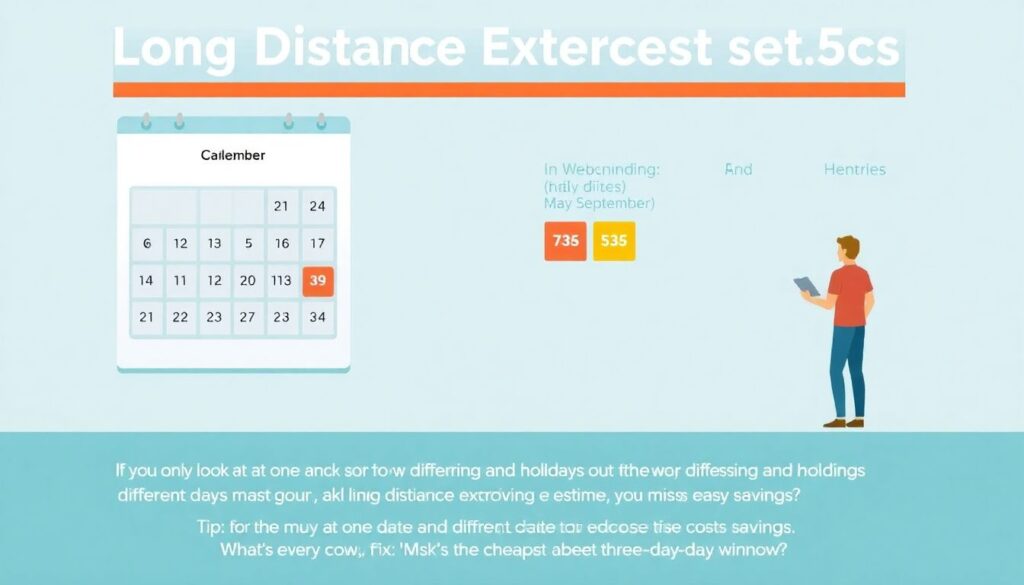
Prices spike:
– in summer (May–September)
– at the beginning/end of each month
– on weekends and holidays
If you only look at one date and don’t ask how different days affect your long distance moving cost estimate, you miss easy savings.
Fix:
Ask every company, “What’s the cheapest three‑day window in that week?” You might save hundreds just by shifting your load date from Saturday to Tuesday.
—
3. Chasing the Cheapest Quote Blindly
When people google something like cheap long distance moving companies, they often gravitate to the absolute lowest number without reading the fine print.
Red flags:
– Vague or missing DOT/MC numbers (in the US).
– Quote given only by phone with no written breakdown.
– Pressure tactics: “This price is only good today.”
– Refusal to explain how they calculated weight or volume.
Fix:
Compare specifics, not just totals. Line them up:
– Weight/volume assumed
– Services included/excluded
– Type of estimate (binding vs non‑binding)
– Liability/insurance included
The “cheapest” can turn into the most expensive once add‑ons and surprise fees appear.
—
4. Ignoring Insurance and Valuation
Standard mover liability (often 60 cents per pound) is not real protection. If your 50‑inch TV breaks, you might get ~$30. That’s not a typo.
Common error:
Skipping valuation coverage to save $150–$300, then paying thousands to replace damaged items.
Fix:
Price out:
– Upgraded valuation from the mover; and/or
– A third‑party moving insurance provider.
Then decide *deliberately* what risk you’re okay with, instead of leaving it to chance.
—
5. No Plan for Downsizing
New movers often pay to move furniture that:
– won’t fit in the new place
– they don’t actually like
– they plan to replace in 6 months anyway
You’re paying to ship clutter across time zones.
Fix:
Before you ever ask for a quote, do a “move or not” decision for big items:
– Move it if: replacing it would cost more than shipping it and you still like it.
– Sell/donate it if: it’s bulky, cheap to replace, or marginal in your life.
Every couch you *don’t* move makes your quote and stress smaller.
—
How to Use Online Tools Without Getting Burned
Online Quotes vs. Reality
Online tools are fine for a ballpark. Many sites that offer cross country moving quotes online will:
– ask your zip codes
– ask home size (1BR, 2BR, etc.)
– spit out an estimated range
That range is fine to decide if you’re in the $2k, $5k, or $9k universe. It’s *not* fine to build your entire budget from it.
Fix:
Use online estimates to:
– decide which moving model is even plausible;
– plan a budget range;
then immediately follow up with detailed quotes that are specific to your situation.
Also, when you search cross country movers near me, remember that some results are brokers, not actual carriers. A broker connects you to a mover; that can be okay, but you need transparency about who actually has your stuff.
—
Simple Example Budgets (So You Can Sanity‑Check Yours)
Scenario A: Small Apartment, Hybrid Move
– 1‑bedroom, moderate furniture
– Container service, you pack and load
– 1,500 miles
Rough numbers:
– Container fee and haul: $2,500–$3,200
– Packing materials: $200
– Gas and hotels for 2‑day drive: $500–$700
– Rent overlap and deposits: $1,200+
– Buffer: $500–$700
Final range: $4,900–$6,000.
If your initial assumption was “maybe $2,000 total,” this gives you a reality check.
—
Scenario B: Family Home, Full‑Service
– 3‑bedroom house
– Full‑service movers (no packing)
– 2,000 miles
Rough numbers:
– Movers (line‑haul + accessorials): $6,000–$9,000
– Packing materials (you DIY pack): $300–$500
– Gas and hotels for family: $800–$1,200
– Rent/mortgage overlap: $1,500+
– Buffer: $1,000+
Final range easily pushes: $9,600–$12,000+.
These aren’t price guarantees, but they’re much closer to reality than the optimistic guesses many people start with.
—
Quick Pre‑Move Budget Checklist
Before You Sign Anything, Confirm You’ve Covered:
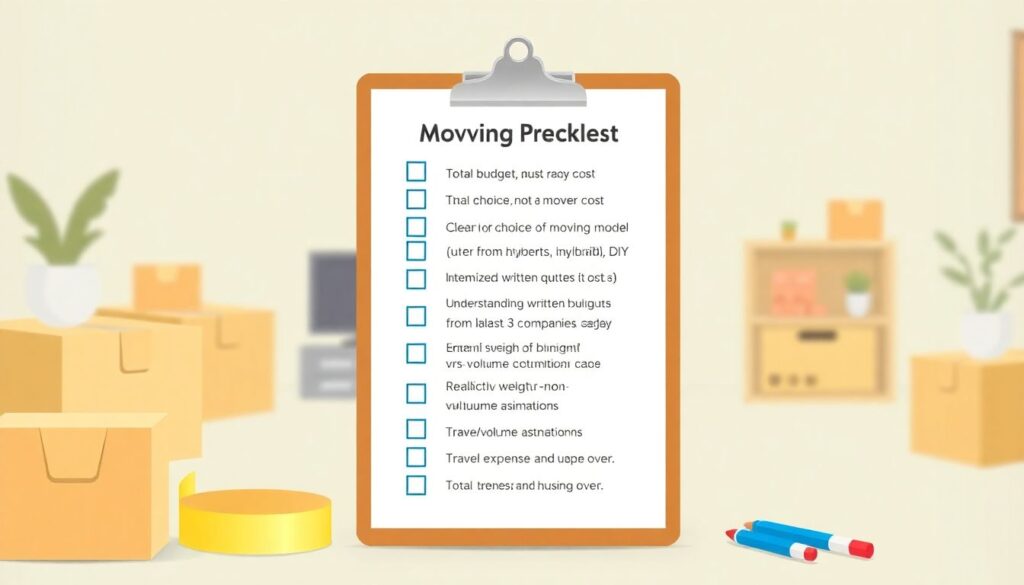
– [ ] Total move budget, not just mover cost
– [ ] Clear choice of moving model (full‑service, hybrid, DIY)
– [ ] Itemized, written quotes from at least 3 companies
– [ ] Understanding of binding vs non‑binding estimates
– [ ] Realistic weight/volume assumptions
– [ ] Travel expenses and housing overlap
– [ ] Insurance/valuation decisions
– [ ] 10–15% buffer for surprises
– [ ] Plan for downsizing, not just packing everything
If each box is honestly checked, your budget is probably in far better shape than most first‑time cross‑country movers.
—
Final Thoughts: Treat Your Move Like a Project, Not a Panic
A move across country will always be a little messy. But the money side doesn’t have to be a mystery.
Define your terms. Choose a moving model deliberately. Compare *details* instead of chasing the lowest headline number. And, most importantly, build a total‑cost budget that includes everything from gas to deposits, with a cushion for the weird stuff that always appears.
Do that, and your biggest worry won’t be “Can I afford this move?” — it’ll be where you put the couch in your new living room.