
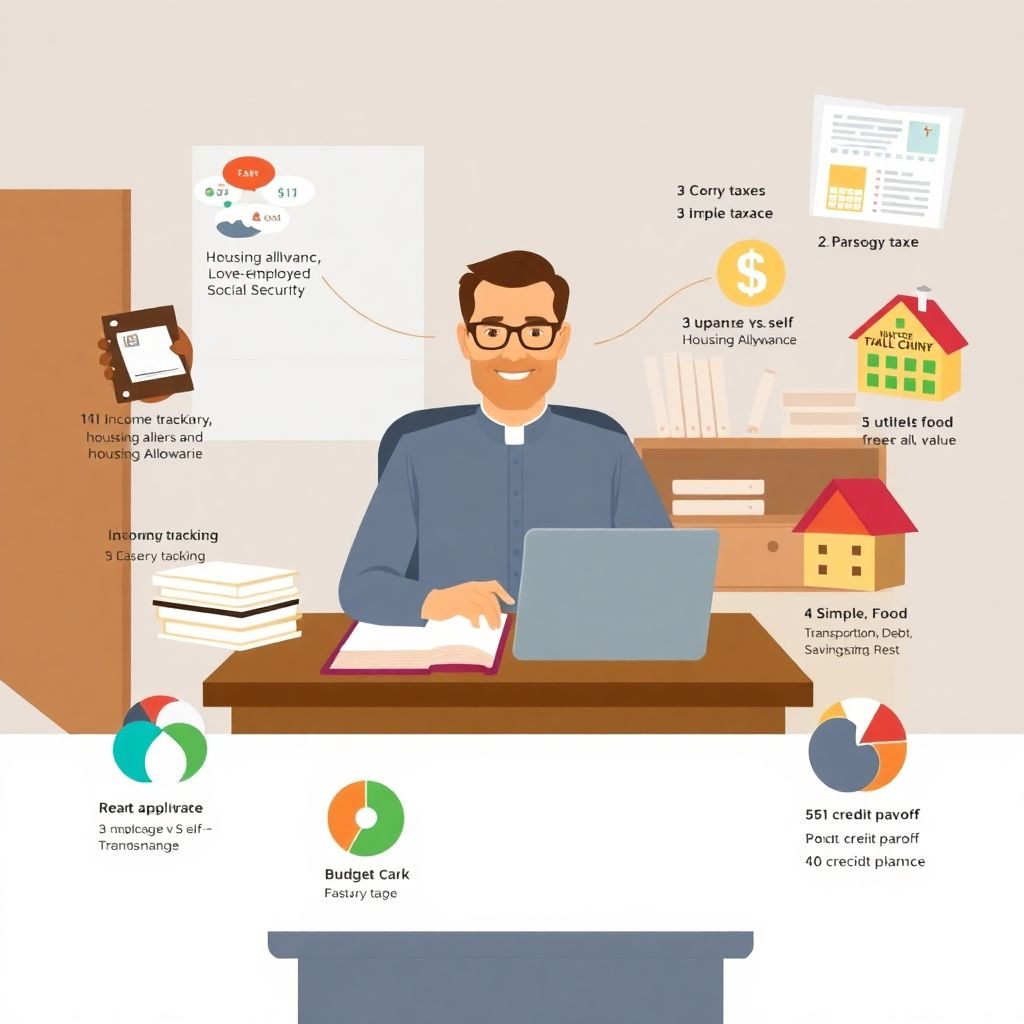
Why Personal Finance Matters So Much for Clergy
Money talk can feel awkward when your life is centered on faith, calling, and service. Still, your ministry becomes heavier—not holier—if you’re constantly stressed about bills, taxes, or retirement. Personal finance for clergy is not about greed; it’s about stability, stewardship, and being able to serve people for the long haul.
Many pastors and ministers assume, “God will provide; it’ll work out somehow.” God does provide—but He also gives us calculators, planners, and plenty of warnings about debt and poor planning. When you understand the fundamentals of financial planning for ministers, you protect not only yourself, but also your spouse, children, and congregation from preventable crises.
Step 1: Know Your Real Income (Not Just Your Salary)
Clergy pay is rarely as simple as “here’s your salary.” You might receive a base pay, a housing allowance, love offerings, honoraria for weddings and funerals, book royalties, and maybe side income from teaching or counseling. If you treat all of this as a vague “God’s blessing” pile, you’ll quickly lose track of where your money is going.
Short case:
Pastor Daniel, 38, led a small urban church. He received a modest salary plus occasional cash gifts and honoraria. He never wrote any of it down—he just deposited or spent it. At tax time, his accountant discovered thousands of dollars he had never reported and housing allowance that wasn’t documented properly. The result: back taxes, penalties, and a full year of financial anxiety.
To avoid Daniel’s situation:
– Create a simple income log (spreadsheet, app, or even a notebook).
– Separate regular salary, housing allowance, and “extra” income (weddings, speaking, etc.).
– Deposit all funds into a bank account first; avoid living from envelopes and pockets.
Warning: Undocumented income is a tax audit magnet. If you can’t prove what’s what, the IRS (or your local tax authority) may assume the worst.
Step 2: Understand Clergy-Specific Tax Rules Early
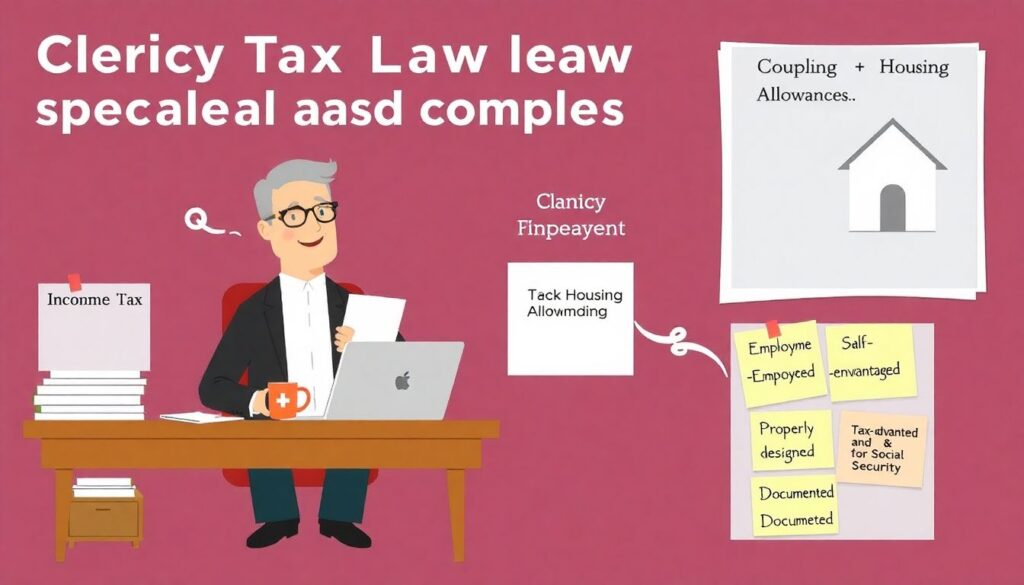
Clergy tax law is… special. You might be treated as an employee for income tax but self-employed for Social Security. You may receive a housing allowance that is tax-advantaged but only if it’s properly designated and documented. That’s why so many ministries lean on clergy tax preparation services—the rules are simply more complex than for most jobs.
A few key realities:
– You are often responsible for your own self-employment tax (Social Security/Medicare equivalent).
– Certain ministry-related expenses may be deductible if handled correctly.
– Mislabeling or casually handling income (for example, “just write the check to me personally”) can backfire.
Short case:
Sister Maria, a bivocational minister, assumed her church’s volunteer bookkeeper “knew how clergy taxes work.” Turned out he didn’t. For three years, her housing allowance was never formally approved by the church board and wasn’t reflected in any minutes. During a review, their advisor informed them that the housing allowance didn’t qualify retroactively. She owed several thousand in taxes she thought she’d legally saved.
If your situation is even mildly complicated (multiple churches, side gigs, housing allowance, parsonage, etc.), strongly consider a professional who specializes in clergy taxes, not just a generic preparer.
Step 3: Master the Pastor Housing Allowance Tax Rules
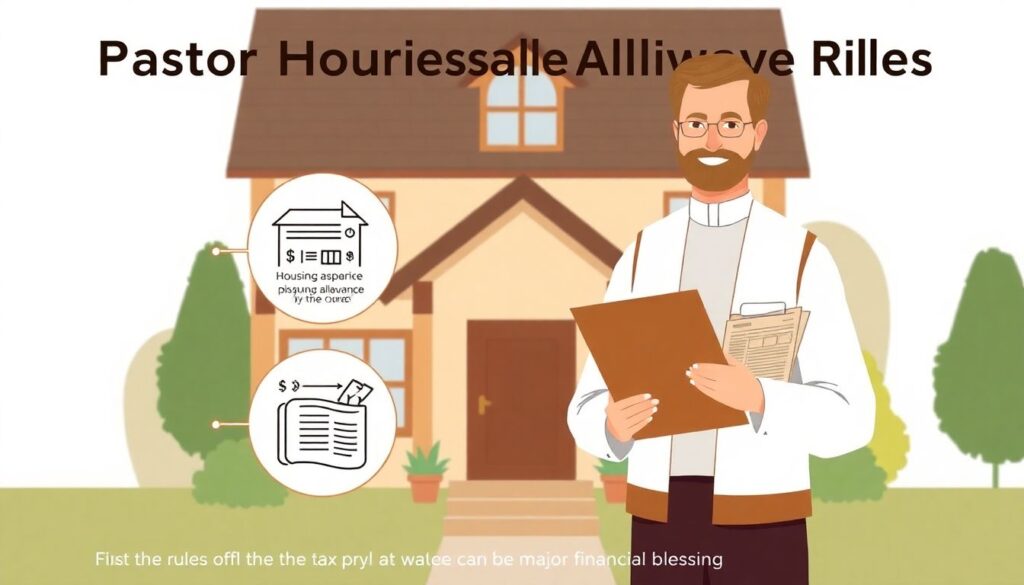
The pastor housing allowance tax rules can be a major blessing—if you follow them carefully. In many jurisdictions (including the U.S.), a properly designated housing allowance can be excluded from taxable income up to the lowest of:
– The amount actually spent on housing,
– The amount officially designated as housing allowance by the church in advance, or
– The fair rental value of the home (furnished, plus utilities).
That’s a big deal. But it’s not automatic.
To keep it clean:
– Ensure your board formally approves the housing allowance before the year starts, in writing.
– Keep receipts and records for rent/mortgage, utilities, repairs, insurance, furnishings.
– Review your actual spending each year and adjust the allowance to a realistic number.
Case from practice:
Pastor James bought a home and depended heavily on his housing allowance for affordability. For years, his church simply wrote “package: $55,000” in his contract without breaking out how much was housing. His new treasurer discovered that—on paper—no official housing allowance had ever been designated. An experienced advisor helped them fix it going forward, but they couldn’t go back and reclassify past years. James had paid extra tax for nearly a decade, simply because no one wrote a one-page housing allowance resolution.
Beginner tip: Ask your church or denominational office if they already have a standard housing allowance resolution template. Many do; it’s just never been used properly.
Step 4: Build a Clear Spending Plan (That Fits Ministry Life)
“Budget” sounds restrictive, but think of it as a spending plan that tells your money where to go instead of wondering where it went. Ministry life is unpredictable: hospital visits at 2 AM, last-minute pastoral care, and seasons of extra giving needs. You need a plan flexible enough to bend, but strong enough not to snap.
At minimum, your personal budget should include:
– Housing (rent/mortgage, utilities, insurance)
– Food and basics
– Transportation (fuel, maintenance, insurance)
– Debt payments
– Savings (emergency + long-term)
– Giving
– Personal care and rest (yes, that matters)
Case:
Reverend Lisa kept going without a budget, telling herself, “We’re not big spenders.” But between impromptu meals out after late-night counseling, generous gifts to congregants in crisis, and kids’ school expenses, she regularly hit overdraft. After finally tracking every expense for 60 days, she discovered more than $400 a month in unplanned, emotionally driven spending. Once she put a simple budget into place, she didn’t stop being generous—but she became more intentional and less stressed.
Warning sign: If you rely on credit cards to “bridge the gap” every month, you don’t have a small budget problem; you have a major one brewing.
Step 5: Crush (or Control) Debt Before It Cripples You
Debt is emotionally sticky for clergy. Many feel guilty for having it, ashamed for talking about it, and pressured to hide it. Yet hidden debt is one of the most common sources of burnout and marital tension among pastors. Student loans from seminary, medical bills, credit cards—these can all quietly erode your joy.
For many, simple steps make a big difference:
– List all debts with balances, interest rates, and minimum payments.
– Choose a method (debt snowball or avalanche) and commit to it.
– Halt new discretionary debt (no “emergency vacations” on credit).
Case:
Pastor Aaron and his wife carried student loans plus credit card debt from years of “making do” on a small salary. They felt like failures and never told anyone. When their denomination offered a confidential financial coaching program, they reluctantly joined. Over four years, they paid off over $40,000—mostly by tightening their budget, increasing income slightly, and using a structured payoff plan. Aaron later said, “I preach freedom from bondage; it was humbling to realize how bound I was by Visa.”
Beginner tip: If your denomination or a partner organization offers debt counseling or coaching for clergy, treat it as a gift, not a rebuke.
Step 6: Build an Emergency Fund (So Ministry Crises Aren’t Money Crises)
Ministry is full of emergencies: funerals, hospital visits, sudden counseling needs. If every personal emergency also triggers a financial emergency, you’ll never feel stable.
A simple target:
– First goal: $1,000–$2,000 saved as quickly as possible.
– Second goal: 3–6 months of basic expenses saved over time.
Case:
When Pastor Naomi’s car died, she had two choices: borrow money from a church member (awkward and boundary-crossing) or open another high-interest credit card. She chose the card. A year later, after intentionally building a small emergency fund, her furnace failed in the middle of winter. This time, she wrote a check from savings, no late-night panic, and no awkward Sunday “prayer requests” about finances.
Warning: Using your emergency fund for predictable yearly costs (holidays, insurance premiums) is just relabeling poor planning. Budget for those separately.
Step 7: Take Retirement Planning for Pastors Seriously (No One Else Will)
Many clergy quietly assume, “I’ll serve until I can’t, and the church will take care of me.” Sometimes they do. Often they can’t. Churches change, budgets shrink, and leadership turns over. That’s why retirement planning for pastors is both a spiritual and practical responsibility.
Think about:
– Do you have a denominational pension or retirement plan? How does it work?
– Are you contributing enough to personal retirement accounts (like IRAs or equivalents)?
– What if you have to step back early due to health or burnout?
Case:
Father Michael served in the same parish for 30+ years. The congregation assumed he had “church retirement,” but contributions had been inconsistent, and nobody checked the statements. At 65, he realized he couldn’t afford to retire. A financial planner helped him downsize, delay retirement a few years, and make targeted contributions, but his window for painless preparation had closed long before.
Beginner tip: Even if you can only save a small amount each month, start now. Time is a more powerful ally than a big paycheck. Increase contributions whenever you get a raise or new stipend.
Step 8: Seek Wise Investment Advice for Pastors (But Keep It Simple)
Once you’re out of constant crisis mode and have some savings, you’ll think about investing. The goal is not to “get rich,” but to put your resources to work so that you can serve longer, give more, and avoid being a financial burden to others.
Be cautious:
Clergy are often seen as trustworthy and sometimes naive targets for financial schemes. Anyone who rushes you, promises guaranteed high returns, or uses spiritual language to sell investments needs a hard pause.
When you look for investment advice for pastors:
– Favor credentialed, fiduciary advisors who are legally bound to put your interests first.
– Keep to simple, diversified investments (broad index funds, balanced portfolios).
– Avoid locking large chunks of money into complex, expensive products you don’t truly understand.
Case:
A well-known evangelist in one region pushed an “exclusive investment opportunity” to pastors: high-interest “safe” notes tied to a real estate deal. Many clergy invested retirement savings. The project collapsed; the money vanished. Those who had stuck to plain, regulated retirement accounts weren’t as flashy—but they also weren’t wiped out.
Warning: If you can’t explain an investment to a layperson in a few sentences, you probably shouldn’t put your retirement into it.
Step 9: Use Professional Help Where It Actually Matters
You do not have to become a tax lawyer or stock analyst to handle money faithfully. But you do need to know enough to recognize when to call in help.
For many clergy, the right mix is:
– A tax professional or firm experienced with clergy, such as specialized clergy tax preparation services.
– A financial planner familiar with financial planning for ministers, denominational benefits, and housing allowances.
– Occasional legal advice for contracts, wills, and estate planning.
Case:
Pastor Ruth tried to prepare her own taxes for years using generic software. She thought she was saving money. When she finally met with a clergy tax specialist, they discovered multiple missed deductions and misclassified housing allowance entries. Not only did the specialist correct her current return; they amended prior years and recovered a few thousand dollars she’d unnecessarily paid.
Beginner tip: Ask your peers: “Who handles your taxes and planning?” Word-of-mouth from other clergy is often more reliable than online ads.
Step 10: Protect Your Family with Basic Safeguards
Financial fundamentals aren’t just about you; they’re about the people who rely on your income and presence. Ministry can be stressful and, at times, physically demanding. It’s wise to plan for the “what ifs.”
Essential protections often include:
– Term life insurance (especially if you have dependents).
– Disability insurance (what if you can’t preach, travel, or counsel due to illness?).
– A simple, up-to-date will and beneficiary designations.
Case:
When Pastor Henry died suddenly in his early 50s, the church was devastated—and his family was almost destitute. He had no life insurance and no will. The congregation did what they could, but they couldn’t replace a decade of lost income. A modest term policy and a simple estate plan would have completely changed his family’s future.
Warning: Hoping your church will “take care of them” is not a plan. It’s a wish.
Step 11: Set Boundaries Around Money and Ministry

Because you live close to people’s pain, it’s easy to merge personal and ministry finances. You pay for groceries for struggling members, you cover camp costs yourself, you quietly subsidize church events. While generosity is beautiful, unbounded generosity can become destructive.
Healthy boundaries might look like:
– A personal giving budget that you and your spouse agree on.
– Clear church policies about benevolence funds, counseling fees, and reimbursements.
– Saying, “I’d love to help, let me see what our church benevolence fund can do,” instead of always reaching for your own wallet.
Case:
Over ten years, Pastor Chloe quietly gave thousands of dollars from her personal funds to cover gaps in the church budget and member emergencies. When her own roof needed replacing, she had to borrow. Her board was stunned; they had never realized how much she’d personally contributed. After this, they created a transparent benevolence policy and insisted she stop filling budget gaps from her own savings.
Step 12: Start Small, Stay Honest, and Keep Learning
You don’t need to fix everything this month. What you do need is a starting point—and a commitment to honest, ongoing attention to your finances.
If you’re just beginning, here’s a simple first-week action plan:
– Write down your current monthly income sources and amounts.
– Track every expense for 30 days without judgment.
– Confirm that your housing allowance, if any, is formally designated in writing.
– Schedule a meeting with a clergy-aware tax professional or financial planner, even if it’s just an initial consult.
Then, over the next 6–12 months, aim to:
– Build a starter emergency fund.
– Create and follow a basic budget.
– Begin or increase contributions to retirement accounts.
– Make a concrete plan for your highest-interest debt.
You live your life teaching others about wisdom, stewardship, and trust. Applying those same principles to your own finances doesn’t diminish your faith—it demonstrates it. With a bit of structure, the right guidance, and a few intentional decisions, the fundamentals of personal finance for clergy can move from vague worry to quiet confidence, freeing you to do what you’re called to do.