
Why HSAs Suddenly Matter So Much
If you’ve ever tried to pick a health plan and felt like you needed a PhD in bureaucracy, you’re exactly the person for whom the term “health savings account hsa for beginners” sounds both promising and slightly terrifying. An HSA is basically a special bucket for money you set aside for medical costs — but unlike most “special buckets,” this one can secretly turn into a long‑term investment account and even a stealth retirement tool if you use it smartly. The twist? You have to pair it with a High Deductible Health Plan (HDHP), and that’s where many people slam the brakes, because “high deductible” sounds like “expensive disaster.” Let’s unpack when that fear is valid, when it’s not, and how to bend the rules in your favor.
Short version: HSAs can be a tax ninja tool, not just a place to park cash for band‑aids and aspirin.
Historical Background: How Did We Get HSAs?
HSAs didn’t just appear out of nowhere. Before them, there were Medical Savings Accounts in the 1990s, a clunky prototype that never really went mainstream. The modern HSA arrived with the Medicare Prescription Drug, Improvement, and Modernization Act of 2003 and started in 2004. Lawmakers were trying to push people toward being “more responsible consumers” of healthcare by giving them skin in the game with high deductibles, then rewarding them with juicy tax perks for money they saved for medical expenses. Over time, employers realized HSAs could also be a recruiting tool, especially in industries where younger workers preferred lower premiums over rich, traditional plans. That’s how HSAs drifted from obscure policy experiment to a common line item in your benefits packet.
Fun twist: HSAs were designed for healthcare, but today many people quietly treat them as a “shadow 401(k)” for future medical costs.
Basic Principles: What an HSA Actually Is
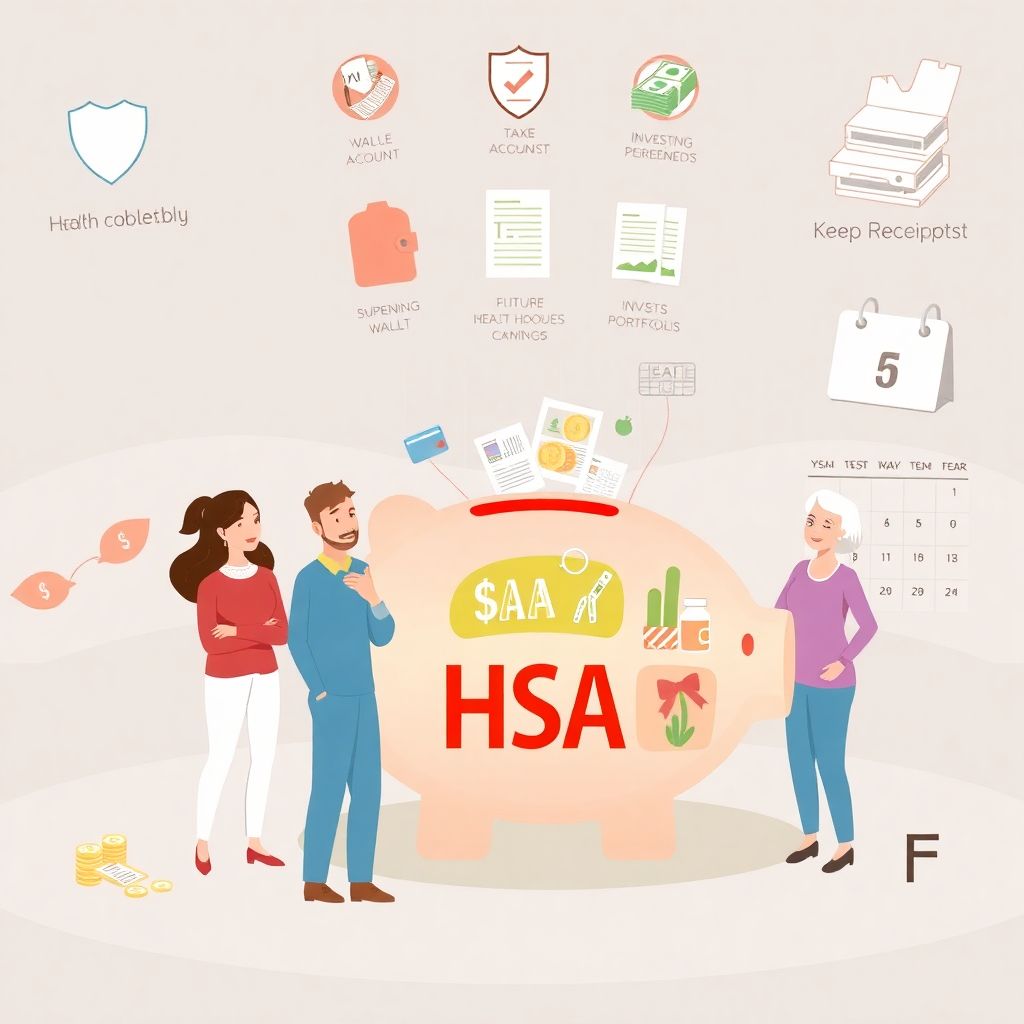
At the most basic level, an HSA is three things at once: a spending account for current medical bills, a savings account for future health costs, and an investment account you can grow over decades. To qualify, you must be on a high deductible health plan that meets specific IRS rules (minimum deductible and maximum out‑of‑pocket limit). You put in money pre‑tax if through payroll, or you deduct contributions on your tax return if you fund it yourself. The money inside grows tax‑free, and if you use it for qualified medical expenses, withdrawals are also tax‑free. That’s the famous “triple tax advantage” you’ll hear people brag about. You own the account; it’s not tied to your employer, and it rolls over year after year with no “use it or lose it” catch.
If you’re thinking “so it’s like a supercharged medical piggy bank,” you’re not wrong.
Key Tax Magic: Why HSAs Are So Loved
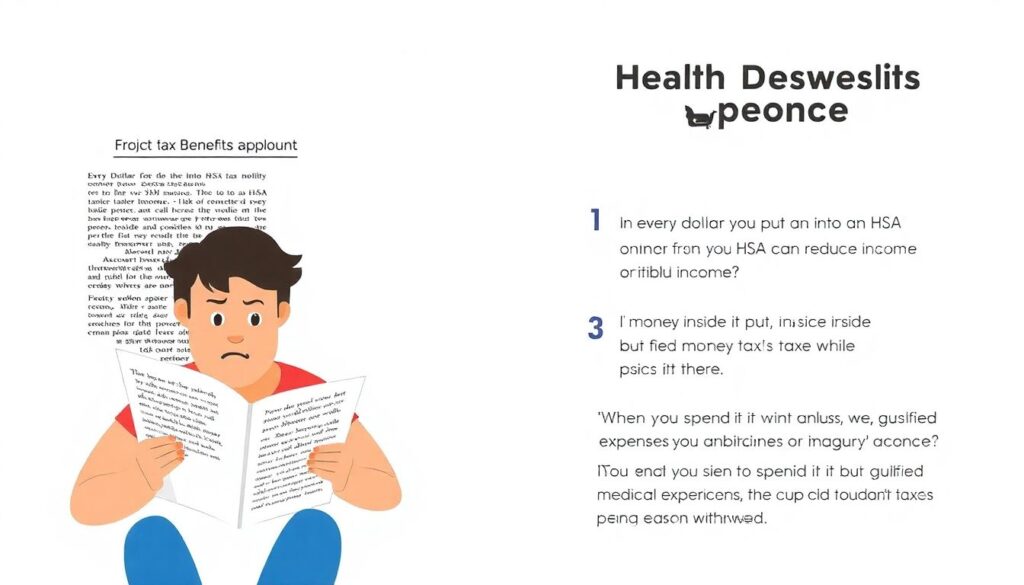
You’ll see a lot of articles with “health savings account tax benefits explained” in the title, then five paragraphs later you’re still lost. Here’s the plain‑English version: every dollar you put in can reduce your taxable income, the growth is shielded from taxes while it sits there, and if you spend it on eligible medical costs, you never pay tax on that money at all. Later in life, after age 65, you can even withdraw HSA funds for non‑medical reasons; you’ll pay regular income tax but no penalty, which makes the HSA behave a bit like a traditional IRA with a healthcare superpower built in. This combo means HSAs can rival — and sometimes beat — your 401(k) or IRA for certain goals, especially if you expect high medical costs in retirement.
In other words, the tax code accidentally handed you a cheat code.
How to Open and Where to Keep Your HSA
You don’t have to stick with your employer’s default HSA bank if it’s lousy. Learning how to open a health savings account online is surprisingly simple: once you’re covered by a qualifying HDHP, you can choose any HSA custodian that will take individual accounts. The best health savings account providers tend to offer low fees, easy‑to‑use apps, and access to decent investment options like index funds and ETFs instead of only low‑interest cash. The slightly annoying part is coordinating contributions: your employer might send payroll contributions to their chosen provider, while you might prefer a different one. The workaround is to accept the payroll deposits, then periodically transfer the money to your preferred HSA custodian where you actually invest it.
Think of your employer’s HSA as the “loading dock” and your chosen provider as the “warehouse” where the real work happens.
Nonstandard Strategy: The “Reimbursement Later” Play

Here’s a creative move most beginners never hear about: you don’t have to reimburse yourself immediately. You can pay today’s medical bills out of pocket with regular after‑tax money, keep meticulous receipts, and let your HSA stay fully invested and growing. Years later — even a decade or more — you can pull money out tax‑free to reimburse those old expenses, as long as they were incurred after you opened the HSA and you kept documentation. This turns your HSA into a time machine: expenses in the past justify tax‑free withdrawals in the future, when your balance is larger. It’s like planting medical‑expense “seeds” now and harvesting tax‑free cash whenever you need it, including during early retirement.
It feels odd at first, but for disciplined savers it’s one of the most powerful HSA hacks available.
Examples: How Different People Use HSAs
Imagine three friends: Maya, Chris, and Lena. All are on HDHPs, but they use their HSAs very differently. Maya is in her 20s, healthy, and living on a tight budget. She uses her HSA like a short‑term shield: she contributes just enough to cover her deductible and pays most medical costs directly from the HSA card. For her, the main win is lower premiums and a cushion for surprise expenses, not long‑term investing yet. Chris, in his 30s with a solid income, treats his HSA like a stealth investment account. He maxes contributions, invests aggressively in stock index funds, and pays all medical bills out of pocket while stashing receipts. Lena, in her 50s with chronic conditions, uses her HSA as a hybrid: she keeps a good cash buffer inside for predictable medication and therapy costs, and invests the rest in calmer bond and balanced funds for the next decade.
Three people, same tool, totally different strategies — and they can all be “right” for their situation.
HSA vs FSA: Which Is Better, Really?
You’ll often see debates framed as “hsa vs fsa which is better,” but that’s like asking if a bike or a minivan is better; it depends what you’re trying to do. A Flexible Spending Account (FSA) is usually “use it or lose it” with a limit on how much you can roll over, and it’s owned by your employer, not you. HSAs, by contrast, roll over indefinitely, are portable, and come with that investment angle. FSAs can be great if you know you’ll have predictable expenses in the coming year — like planned orthodontics or recurring prescriptions — and your employer offers a generous contribution. HSAs shine when you want long‑term flexibility, tax‑advantaged investing, and portable ownership. In some setups, you can even have a limited‑purpose FSA for dental/vision plus an HSA, stacking the benefits if your employer allows it.
So it’s less a cage match and more a toolkit: pick the right tool for each job.
Common Misconceptions That Cost People Money
A huge myth is that HSAs are “only for rich, super‑healthy people.” Reality is more nuanced. Yes, HSAs pair best with an HDHP when you can handle surprise costs without panic, but income isn’t the only factor; stability of cash flow and your risk tolerance matter just as much. Another misunderstanding is thinking contributions are “locked” until retirement. In truth, you can swipe the HSA card the same day you open it for eligible expenses. People also confuse HSAs with FSAs and worry about losing unspent money at year‑end — that’s an FSA problem, not an HSA one. A sneaky misconception: many assume they must use the HSA offered by their employer. You can open your own elsewhere, roll funds over, and treat the employer HSA as temporary. Finally, lots of folks don’t realize Medicare enrollment changes the rules; contributions must stop, but you can absolutely keep spending the existing balance.
Misunderstanding any of these points can mean missed tax breaks or unnecessary fear of HDHPs.
Nonstandard Ideas: Using HSAs Creatively and Safely
If you want to go beyond basics, think of your HSA as part of a wider life strategy, not an isolated account. One unusual move: use the HSA as your “healthcare opportunity fund” for big, planned upgrades — like elective surgery abroad in a country with excellent, lower‑cost care, or a once‑in‑a‑lifetime fertility treatment round. Another unconventional idea: treat it as a bridge for early retirement — fund your HSA aggressively during high‑income years, then in your 50s and 60s use tax‑free withdrawals to cover premiums, prescriptions, and preventive care, letting other investments stay untouched longer. Just remember, creativity only works when you respect the rules: keep receipts, know what counts as a qualified expense, and avoid mixing in non‑medical spending before 65 unless you’re prepared for taxes plus penalties.
Push the HSA to its limits, but don’t gamble with the IRS watching.
How to Get Started Without Overthinking It
To keep this practical: confirm your health plan is HSA‑eligible, then decide your main goal — short‑term safety net, long‑term investing, or a mix. Figure out a realistic monthly contribution; even $25 a paycheck beats zero, because it opens the door to the long‑game strategies we discussed. If your employer offers an HSA contribution, grab the full amount — that’s free money. Next, choose whether you’re happy with the default custodian or want to scout the best health savings account providers with stronger investment menus and lower fees. Once the account is live, set an automatic contribution, decide how much to keep in cash (often at least your expected near‑term expenses), and invest the rest according to your risk tolerance and time horizon.
Then, pick one nonstandard tactic — like saving receipts to reimburse later — and test it for a year.