

Money leaks are rarely about math. You know how to add and subtract. Yet somehow your bank balance keeps surprising you—in the bad way. That gap between “I’ll be careful this month” and “How did I spend all of that?” is exactly where the psychology of overspending lives.
Let’s unpack what’s going on in your head, and then dig into some surprisingly effective (and a bit unconventional) ways to actually stop blowing your budget.
—
What your brain is really doing when you overspend
Your brain runs two main “systems” when you deal with money:
– Fast brain: emotional, impulsive, wants the dopamine hit now
– Slow brain: rational, long‑term, cares about savings, retirement, debt
Overspending happens when your fast brain keeps winning tiny battles all day long. Each small “yes” doesn’t feel like much—coffee here, upgrade there—but your slow brain only wakes up later when the credit card statement lands.
Three powerful psychological drivers are usually at play:
– Reward seeking – Your brain treats every purchase like a tiny lottery of “maybe this will make me feel better.”
– Future discounting – A $50 treat today feels more real than $500 saved a year from now.
– Social comparison – You don’t feel rich or poor in absolute terms; you feel it compared to people around you or in your feed.
So when you wonder how to stop overspending money, the answer is rarely “more willpower.” It’s: how do I design my life so my slow brain has a fair shot?
—
Hidden triggers that quietly blow your budget
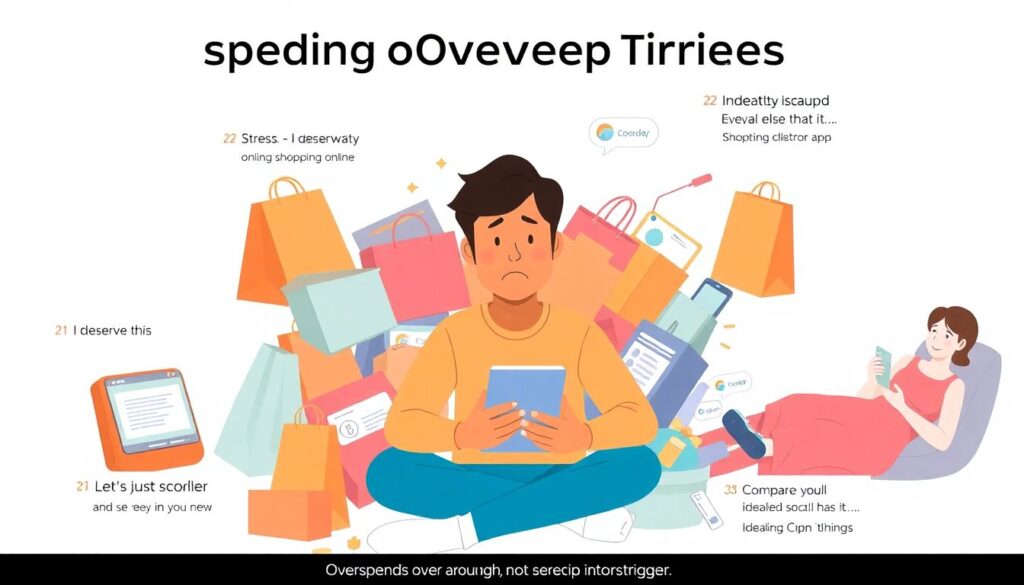
Let’s make this concrete. Overspending usually clusters around a few emotional and situational triggers—not around specific stores or websites.
Typical emotional triggers:
– Stress (“I deserve this”)
– Boredom (“Let’s just scroll and see what’s new”)
– Insecurity (“Everyone else has it… I’m behind”)
– Fatigue (“I’m too tired to cook; let’s just order in”)
Situational triggers are sneakier: payday, late‑night phone scrolling, “limited time offers,” emails with discount codes, friends who always suggest the pricey option.
A quick unconventional exercise:
For one week, don’t try to spend less. Just keep a “What I felt” log next to your spending log. One word per purchase: bored, anxious, excited, lonely, tired. You’ll spot patterns faster than you expect—and those patterns will matter more than the exact dollar amounts.
—
Comparing approaches: discipline vs. design vs. delegation
Most advice about overspending falls into three broad camps. They all work for some people and fail badly for others.
1. Discipline‑first (“Just budget harder”)
– Focus: willpower, strict rules, tracking every cent
– Works best for: detail‑oriented people who like structure and checklists
2. Design‑first (change your environment)
– Focus: make bad choices harder and good choices easy
– Works best for: people who hate tracking but can tweak routines and systems
3. Delegation‑first (let tools and humans do the heavy lifting)
– Focus: automation, coaching, outsourcing decisions
– Works best for: busy, overwhelmed folks who will not micromanage their money
Pure discipline can feel like a diet: intense, short‑lived, and followed by a binge. Pure delegation can make you detached and careless. Pure environment design won’t fix deep emotional triggers like shame or scarcity.
The most stable strategy usually blends all three: a few rules, a designed environment, plus some support you don’t have to manage every day.
—
Tech tools for overspenders: powerful, but not magic
In 2026, there’s an app, plug‑in, or AI assistant for every tiny aspect of your money life. That doesn’t automatically make you better with money—sometimes it just makes your guilt prettier.
Let’s look at the best budgeting apps to control spending as a psychological tool, not just a tech toy.
Pros of budgeting and spending apps
– Instant feedback: category alerts when you’re close to your limit
– Pattern spotting: monthly visuals of your “problem days” and “problem categories”
– Automation: linking accounts so you don’t rely on memory
– Gentle friction: notifications that force your slow brain into the conversation
Cons and pitfalls
– Alert fatigue: so many notifications that you start ignoring all of them
– False security: feeling “on top of it” because you *look* at graphs, not because you change behavior
– Gaming the system: moving categories around to justify overspending (“it’s still in the budget… kind of”)
– Data overwhelm: too many features, not enough simple, clear decisions
The sweet spot: choose tech that makes specific decisions easier (“Do I order food again this week?”), not just tech that makes *information* prettier.
—
How to choose the right tools and tactics for your brain
Before you pick methods, pick a diagnosis: what type of overspender are you right now?
Ask yourself:
– Do you mostly overspend in one or two categories (food, clothes, subscriptions)?
– Do you blow your budget mainly on a few big “oops” purchases a year?
– Or is it constant low‑level leaking that just never stops?
Now align tools to the problem:
– Category spillover (e.g., food, shopping):
– Use apps that let you set *micro‑limits* per week, not just per month.
– Turn on *category‑specific* alerts only, to avoid overwhelm.
– Big impulse buys:
– Use browser extensions that block checkout or add a 24‑hour delay for carts over a certain amount.
– Create a “Big Buy Form” for yourself: you’re not banning big purchases; you’re requiring a short written justification with pros/cons, alternatives, and timing.
– Constant leaks:
– Use a “default account” with a low balance connected to your cards and keep savings in a separate, harder‑to‑touch place.
– Have automatic transfers out the day after payday, so you *see* less available.
When you evaluate tools:
– Look for one‑click clarity: “What can I safely spend this week?” should be visible in seconds.
– Avoid tools that require more than 10 minutes a week of maintenance once set up.
– If a tool doesn’t noticeably change your decisions after one month, it’s decoration—drop it.
—
Unconventional psychological hacks that actually work
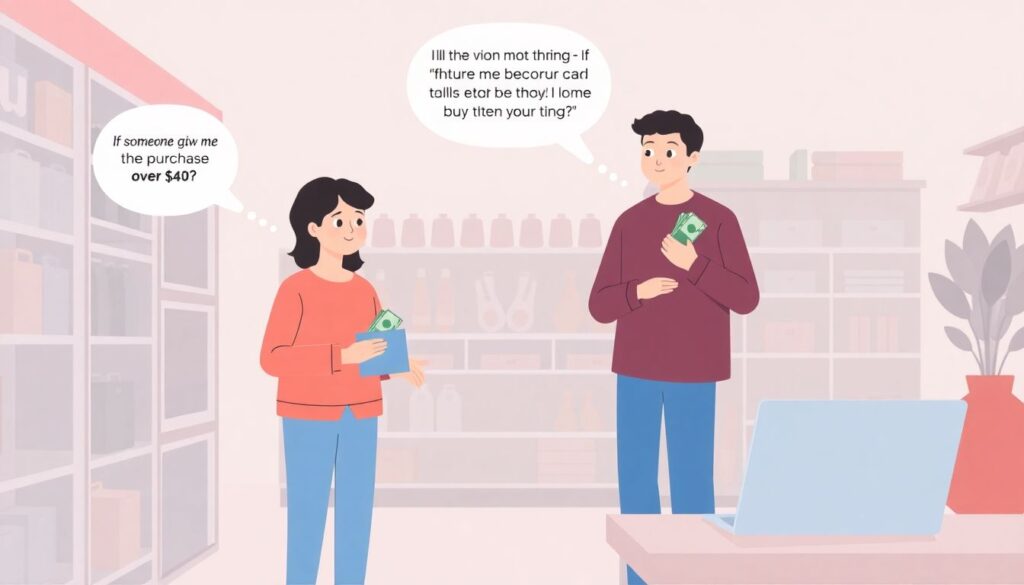
Let’s get into the non‑standard stuff—the small, slightly weird tweaks that exploit how your brain already works.
– The “future me” rule: Before any non‑essential purchase over a set amount (say, $40), ask only one question: “If someone gave me the cash *right now*, would I buy this exact thing?” If the answer is “I’d probably save it for something else,” skip it. This cuts through marketing fog and focuses on revealed preference.
– Budgeting by identity, not numbers: Instead of “I should spend less on takeout,” try “I’m becoming the kind of person who hosts simple dinners at home.” Then schedule the behavior: one low‑effort dinner with friends every two weeks. You replace the reward (connection, fun) without the same expense.
– Shame swap: If you feel embarrassed by your money situation, channel it differently. Tell one trusted person: “I’m working on my spending. My rule: if I buy [your weak spot] without planning, I’ll send you a screenshot and we’ll dissect it together.” Overspending thrives in secrecy; it shrinks under (kind) observation.
– Artificial scarcity days: Pick two “no‑spend adventures” days per month. You’re not allowed to buy anything non‑essential, *but* you must design a fun day using only what you already own and free resources. This trains your brain to associate frugality with creativity, not deprivation.
—
When to bring in human help: coaching, courses, and consolidation
If overspending has already turned into debt, it’s not a character flaw; it’s a signal that your current system + environment + emotions are too strong for solo tactics.
Three external supports can change the game:
– Debt consolidation services for overspending
Can simplify multiple high‑interest debts into one payment with a lower rate and a fixed payoff plan. Psychologically, this replaces scattered anxiety with a single, clear target—but only works if you also change your behavior so you don’t re‑fill the credit cards.
– Financial coaching for bad spending habits
Unlike traditional advisors who only talk about investments, good financial coaches blend numbers with behavior: they’ll ask what you were feeling when you clicked “buy,” not just what you bought. This is especially helpful if you repeatedly sabotage your own plans.
– Money management courses to improve budgeting
Especially the new generation of 2026 courses that are bite‑sized, app‑based, and heavy on role‑playing real situations (like group simulations of “Black Friday” or a surprise medical bill). Look for courses that explicitly mention psychology, behavior, and values, not just spreadsheets.
If you pick any of these, ask one test question: “How will this change my day‑to‑day decisions, not just my long‑term plan?” If there’s no clear answer, keep looking.
—
Tech and behavior trends in 2026 you should know about
The psychology of overspending is colliding with some powerful trends right now:
– AI‑driven “spend guardians”
Banking apps increasingly use AI to flag “out‑of‑character” spending in real time. Done well, this feels like a friend nudging you: “Hey, this is your third late‑night food order this week—want to set a cap?” Done badly, it feels creepy and naggy. Expect more banks to roll this out by default.
– Emotional tagging of transactions
Some newer apps now let you tag transactions with emotions and then visualize your “emotional spending map.” This turns vague “retail therapy” into hard evidence that, say, Tuesday evenings after meetings are your danger zone.
– Subscription sanitation
In 2026, more fintech tools automatically surface “zombie subscriptions” and suggest cheaper alternatives based on your actual usage. This targets one of the stealthiest forms of overspending: small recurring charges you forgot about.
– Social saving, not just social spending
Group chats and micro‑communities are emerging around goals like “No‑Buy 2026” or “Minimalist wardrobe challenge.” The same social pressure that used to fuel overspending is slowly being repurposed toward saving and intentional living.
Lean into the trends that give you friction at the right moments—before you tap “buy,” not after your statement arrives.
—
A simple, realistic blueprint to stop blowing your budget
If you want something you can start this week, try this 4‑step experiment for one month:
– Week 1 – Observe, don’t fix
Track spending + one‑word emotion for every non‑essential purchase. No judgment, no changes. Just data and patterns.
– Week 2 – Remove the worst trigger
Identify your most common combo (e.g., “tired + food delivery”). Add one friction: delete food apps from your phone, or move your credit card out of reach in the evenings.
– Week 3 – Add one delightful alternative
For each trigger, pre‑plan a cheaper feel‑good option: a walk and podcast instead of scrolling shops, a simple frozen meal instead of takeout, a library visit instead of “just browsing” at the mall.
– Week 4 – Choose one tool and one human
– Tool: a budgeting or banking app set up to give only the 1–2 alerts that match your triggers.
– Human: a friend, coach, or online group where you’ll post a weekly screenshot of your spending summary and one lesson you learned.
At the end of the month, ignore perfection. Ask just two questions:
1) “Where did overspending drop with the least effort?”
2) “Which friction felt annoying but effective?”
Keep those. Drop the rest. Then build slowly from there.
You don’t need to become a different person to stop overspending. You just need to stack the deck so that your better instincts win a little more often—and your worst impulses hit a few more roadblocks on the way to the checkout button.