

Why Sustainable Investing Is No Longer Just “Nice to Have”
Imagine your money as a tiny employee.
Every day it goes to work somewhere: in a factory, in a data center, in a farm, in an app you’ve never heard of.
The question is simple:
Is it working for the future you actually want to live in?
That’s where sustainable investing comes in. It’s not charity, it’s not just “feeling good” — it’s a way to align profit with long‑term stability of the planet, society, and your own portfolio. And yes, sustainable investing for beginners can be both structured and surprisingly creative.
Let’s unpack *how* — with concrete steps and a few unconventional moves along the way.
—
What “Sustainable” Really Means (Without Buzzwords)
ESG in Plain Language
You’ll often see three letters: E, S, G.
– E – Environmental: How a company affects climate, water, biodiversity, waste.
– S – Social: How it treats workers, customers, suppliers, communities.
– G – Governance: How it’s run: board structure, transparency, executive pay, corruption risks.
So when you search *how to invest in ESG companies*, you’re really asking:
“Which businesses manage environmental, social, and governance risks *better* than the crowd — and could be more resilient because of that?”
No magic. Just risk management plus long‑term thinking.
—
Set Your Own Sustainable Investing Rules First
Define Your “Red Lines” and “Green Lights”
Before opening any app, decide what you’re okay with and what’s off-limits:
– Red lines (no-go)
– Coal, tar sands, oil exploration?
– Tobacco, weapons, gambling?
– Companies with repeated labor violations?
– Green lights (priority)
– Renewable energy, energy efficiency
– Sustainable agriculture, water solutions
– Healthcare access, education technologies
– Circular economy (reuse, repair, recycling)
Write this down. Literally. A five-line note in your phone already puts you ahead of most investors who “kind of care” but never define it.
This becomes your personal policy for sustainable investing — your filter against greenwashing.
—
Step 1: Start with Your Current Accounts (The “Silent Portfolio” Audit)
Look at Where Your Money Already Sleeps
Most beginners skip this. They open new “green” accounts while their biggest chunk of money quietly finances the opposite.
Check:
– Bank savings accounts
– Employer retirement plan (401(k), pension, etc.)
– Existing brokerage accounts
Ask your provider:
– “Do you offer ESG or sustainable index funds?”
– “What are the default funds in my retirement plan, and do they have fossil fuel exposure?”
Many ethical investment platforms for beginners now offer a simple toggle:
“Low carbon,” “Fossil free,” “Social impact,” etc.
Use it. Even moving a default retirement fund to a broad ESG index can make a bigger impact than any tiny side account.
—
Step 2: Choose Your Sustainable Investing Style
1. Hands-Off: Funds Do the Heavy Lifting
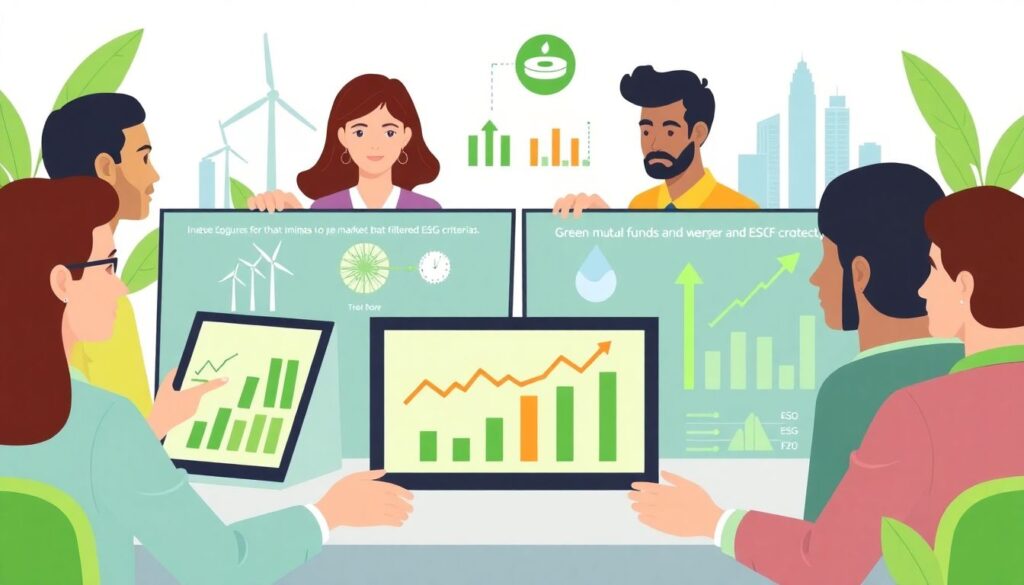
If you don’t want to pick individual companies, use pooled products:
– Index ESG funds – mimic the market but filter based on ESG criteria.
– Green mutual funds and ETFs to invest in – focus on sectors like clean energy, water, smart infrastructure.
When you research the best sustainable investment funds, look for:
– Clear ESG methodology (how they screen companies)
– Reasonable fees (expense ratio under ~0.5% is a good starting benchmark for ETFs)
– Diversification (not just five solar stocks and a dream)
2. Hands-On: Picking Individual ESG Companies
If you’re curious and like research:
1. Start with companies you already use
– Your phone brand, streaming platform, grocery chain.
– Look for their sustainability or ESG reports on their websites.
2. Check third‑party ESG ratings
– MSCI ESG, Sustainalytics, or ratings shown in many broker apps.
– Don’t treat a score as truth; treat it as a starting clue.
3. Then check basic financial health
– Revenue growth
– Profitability
– Debt levels
Sustainability without financial stability is just wishful thinking.
—
Step 3: Build Your First Sustainable Portfolio (Simple, Not Cute)
A Practical Starter Structure
You can start small but systematic. For example:
– 60–80% in broad ESG index funds (your “core”)
– 10–20% in thematic funds (climate tech, clean water, sustainable agriculture)
– Up to 10% in individual stocks you personally research and believe in
That’s it. No need for twenty different positions from day one.
—
Nontypical Moves: Beyond Just “Buying Green Funds”
Use Your Rights as a Shareholder
Sustainable investing isn’t only *where* you invest, but *how* you show up as an owner.
Unusual but powerful actions:
– Vote on shareholder resolutions
– Many brokers let you vote via app.
– Look for proposals on climate disclosure, human rights, political spending transparency.
– Delegate your vote
– Some platforms (and new fintech tools) let you align your voting with climate or social justice policies.
– You’re not just “investing”; you’re literally changing corporate behavior.
Turn Your “Fun Money” into Experimental Impact Capital
Instead of random meme stocks:
– Allocate a tiny slice (1–3% of your portfolio) for:
– Community solar projects or green bonds
– Crowdfunding platforms for sustainable startups
– Local cooperatives (food co‑ops, community land trusts)
The goal is not only return; it’s learning. Treat this as tuition in how real-world impact finance works.
—
How to Filter Out Greenwashing (Without Being an Analyst)
Three Quick Red Flags
When a fund or company markets itself as “green” or “ethical”, ask:
– Is “sustainable” just in the name, or in the numbers?
– Check top 10 holdings in a fund. If you see large oil majors in a “climate” fund, be skeptical.
– Do they disclose clear metrics?
– Emissions (Scopes 1, 2, and ideally 3), diversity data, supply chain audits.
– Vague stories with zero numbers = marketing, not management.
– Are targets science‑based and time‑bound?
– “Net zero by 2050” with no 2030 target or concrete roadmap is a red flag.
Simple Research Habits for Beginners
Build a 10‑minute research routine before you invest:
– Google: “Company name + sustainability report”
– Check last year’s report:
– Any independent verification?
– Any mention of controversies or fines?
– Cross‑check with:
– ESG rating summary in your broker app
– News on labor disputes, environmental accidents, or regulatory issues
You’re not trying to be perfect — just to avoid the most obvious traps.
—
Where to Actually Buy: Platforms That Won’t Drive You Crazy
Choosing Beginner‑Friendly Sustainable Platforms
When you look for ethical investment platforms for beginners, prioritize:
– Plain-language ESG explanations – not just acronyms
– Low minimums – $10–$100 is enough to start
– Automatic investing options – to set up monthly contributions
– Clear fee structure – avoid platforms that bury fees in fine print
Different platform types:
– Traditional brokers with ESG screens and green ETFs
– “Impact-first” apps that let you choose themes like climate, gender equity, or affordable housing
– Robo‑advisors with sustainable investing templates
Pick one that you actually like using — friction kills consistency.
—
Risk: The Part Most “Feel-Good” Guides Skip
Sustainable ≠ Risk-Free
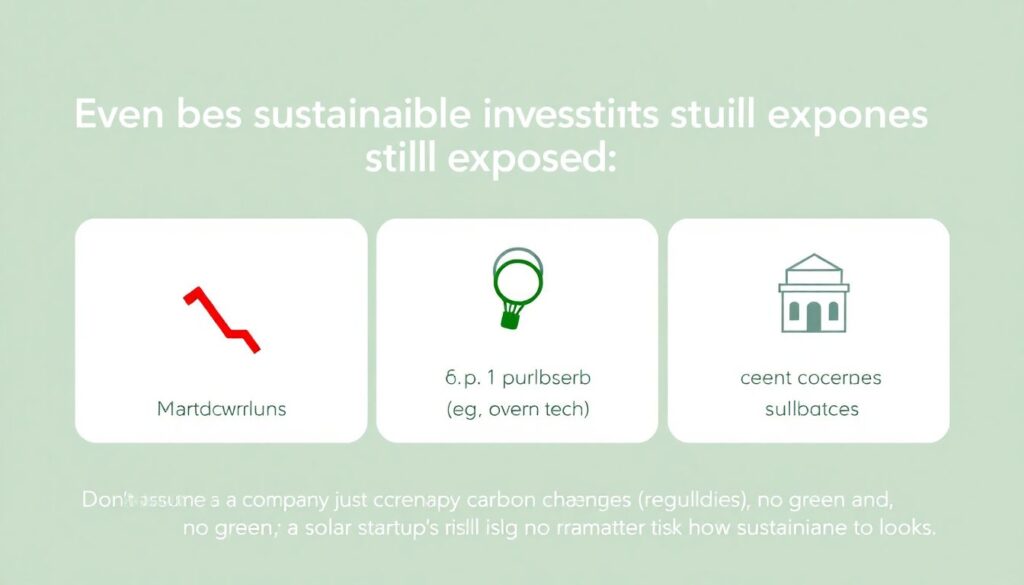
Even the best sustainable investment funds are still exposed to:
– Market downturns
– Sector bubbles (e.g., overhyped clean tech)
– Policy changes (subsidies, regulation, carbon pricing)
Don’t assume a company is safer just because it’s “green.” A solar startup with no revenue is risky no matter how impressive its mission sounds.
Practical Risk Management for Beginners
– Diversify across sectors
– Don’t put everything into just “renewables”; include healthcare, tech, industrials with strong ESG.
– Use dollar‑cost averaging
– Invest a set amount every month instead of trying to time the market.
– Set a maximum allocation per idea
– For individual stocks, cap at 5% of your portfolio per company.
This protects you from your own enthusiasm.
—
Unconventional Angles: Sustainable Investing You Don’t See in Ads
1. Vote with Your Cash, Not Just Stocks
Your bank and credit card also invest. Some of the biggest fossil fuel funding comes from everyday banks.
Possible moves:
– Switch part of your money to a bank with strong ESG policies or fossil‑free lending policies.
– Use green debit/credit cards that plant trees or support carbon‑cutting projects — but verify the actual impact, not just slogans.
2. Join Forces: Investment Clubs with a Mission
Instead of studying alone, form or join a small:
– Sustainable investment club with 3–10 people
– Meet monthly, discuss one sector (e.g., sustainable agriculture), share research.
– Pool a small amount to make joint decisions, or each invest independently after discussion.
This massively speeds up your learning curve and helps avoid impulsive decisions.
3. Treat Your Career as Part of Your “Portfolio”
A radical but honest idea:
Sometimes the most impactful “sustainable investment” isn’t a stock — it’s your skills.
Ask yourself:
– Can you shift your career toward climate tech, sustainable supply chains, ESG data, green architecture, etc.?
– Can you freelance or consult for organizations driving real change?
The *present value* of your lifetime earnings plus impact can easily overshadow what you have in your brokerage today.
—
Putting It All Together: A Simple 30-Day Action Plan
Week 1: Clarity
– Write your red lines and green lights.
– Audit your existing accounts and funds.
– Read one ESG report from a company you know.
Week 2: Setup
– Open an account on a platform that supports ESG options.
– Select 1–2 broad ESG index funds as your core.
– Set up an automatic monthly contribution (even $25–$50).
Week 3: Exploration
– Research green mutual funds and ETFs to invest in that match your interests (water, agriculture, clean tech).
– Allocate a small percentage (10–20% of your investments) to one or two thematic funds.
Week 4: Experiment
– Pick one unconventional move:
– Vote on shareholder proposals
– Shift to a more sustainable bank
– Join or start a small sustainable investing group
– Allocate 1–3% to an experimental impact project
At the end of 30 days, you’ll have:
– A functioning sustainable portfolio
– Clear personal criteria
– A system you can improve, instead of a someday‑maybe intention
—
Final Thought: You Don’t Need to Be Perfect to Be Powerful
You will make mistakes. Everyone does.
You’ll buy a “green” fund that later looks less green. You’ll miss an opportunity. You’ll change your criteria.
That’s normal.
The real shift happens when you stop seeing money as something that just sits in an account and start treating it as a lever — one you control.
Sustainable investing for beginners isn’t about purity; it’s about directional change with real numbers behind it.
Choose your rules, set up a simple system, keep refining. Over time, your portfolio can do what good investments have always done:
grow — and quietly reshape the world that growth happens in.