
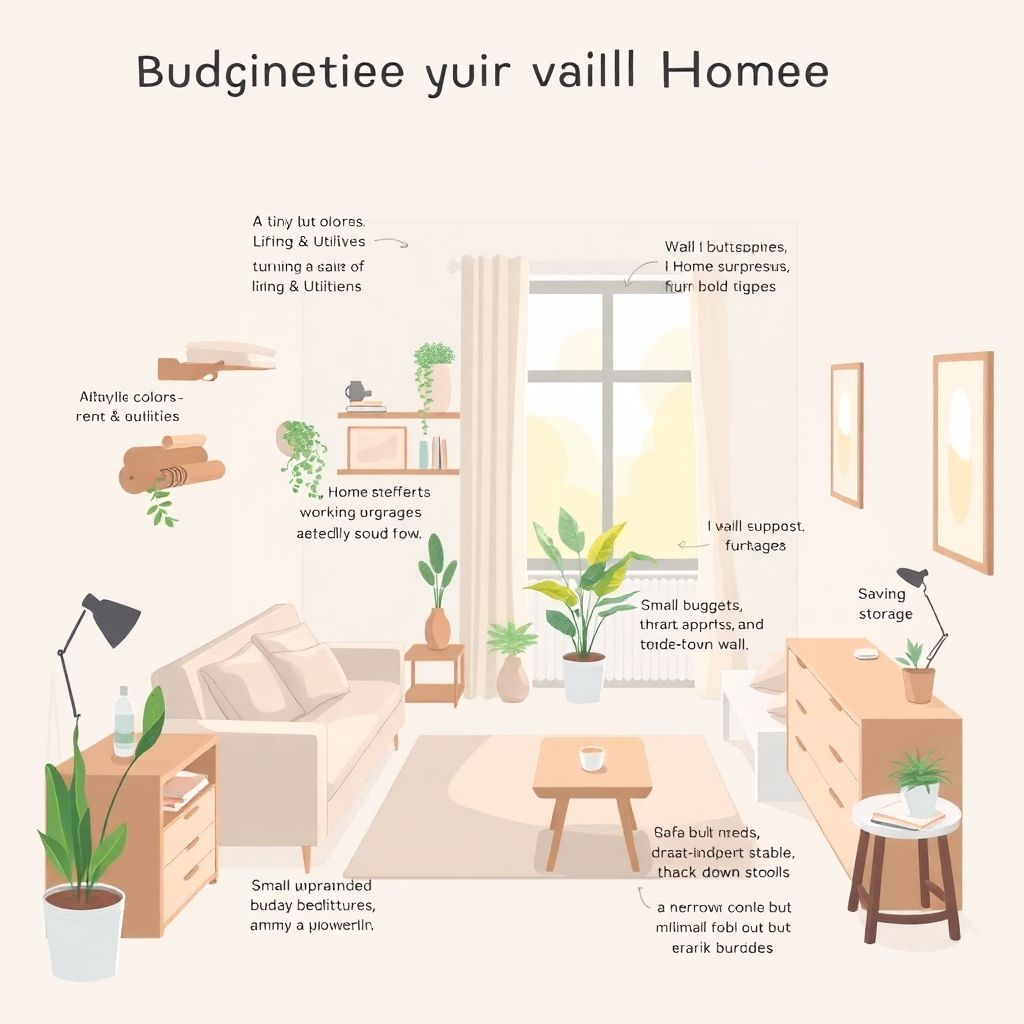
Why budgeting for a small home is a whole different game
Living in a smaller home sounds like it should automatically be cheaper. Less space, fewer bills, right? In reality, tiny spaces have their own money traps: storage problems, constant “micro‑upgrades”, impulse decor buys, and surprisingly high utilities if the place is old or poorly insulated. Effective budgeting for smaller homes is less about strict frugality and more about making every square foot – and every dollar – do double duty.
Think of your budget as a floor plan for your money. If you just stack random things wherever they fit, the apartment turns into chaos. If you plan zones with a purpose, it suddenly feels bigger. Same with your finances: once you assign clear “zones” for rent, utilities, savings, upgrades, and fun, you get control without feeling deprived.
—
Essential tools: your small‑home money starter kit
You don’t need a degree in finance or a wall of spreadsheets to get started. You just need a handful of simple tools you’ll actually use – consistently.
Here’s a minimal but powerful setup:
– A notebook or digital note app to brain‑dump all expenses
– A simple spreadsheet (or Google Sheets template) to track categories
– One of the best budgeting apps for households that can sync with your bank (YNAB, Mint, or PocketGuard, for example)
– A shared calendar or reminder app for bill due dates
If you like having everything in one place, look for a home budget planner for small homes that lets you track rent, utilities, subscriptions, and even planned purchases like storage solutions or decor. The key isn’t fancy features; it’s whether you’ll open it more than once a month.
—
Case study #1: The couple who kept “leaking” $300 a month
Anna and Mark lived in a 36 m² one‑bedroom. Rent was manageable, but somehow they were always short before payday. When they finally tracked their expenses, they found three main leaks: food delivery, random storage baskets and organizers (“because small home!”), and online subscriptions they’d forgotten they had.
In one month, they discovered:
– €120 on takeout they barely remembered
– €80 on “cute small‑space storage” that didn’t actually add storage
– €60 on subscriptions (two streaming services, a forgotten fitness app, cloud storage they didn’t use)
Nothing was huge on its own, but together it was almost a third of their rent. Once they saw it clearly, fixing it felt less like “we need to suffer” and more like “we’re turning off the taps that are literally leaking money out of the apartment.”
—
Step 1: Map your real costs (not the ones in your head)
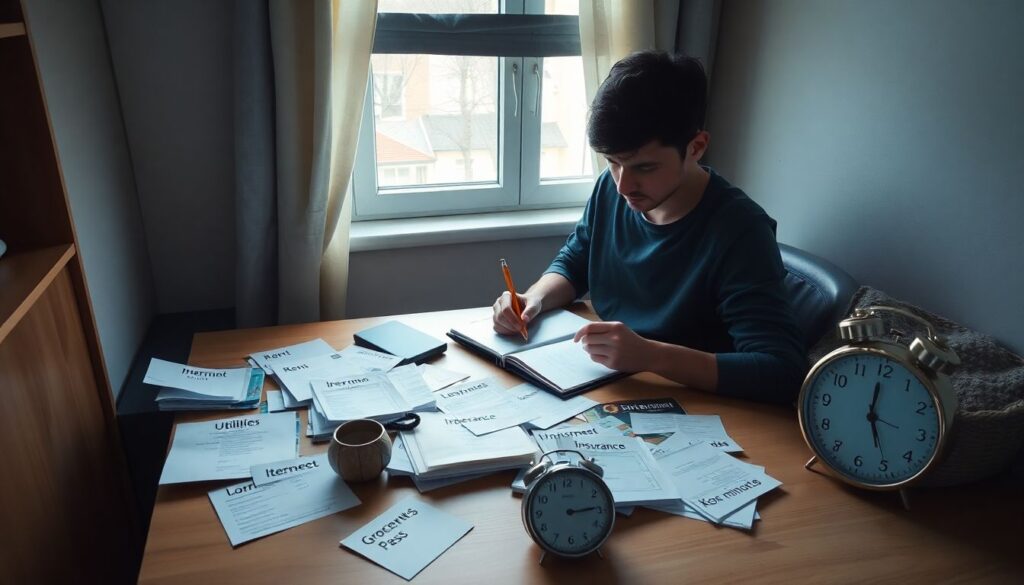
Before you start “optimizing” anything, you need a brutally honest picture of what living in your small home really costs you. Not just rent and bills – everything.
Spend 30–40 minutes listing:
– Fixed costs: rent, utilities, internet, transport pass, insurance
– Variable but recurring costs: groceries, cleaning supplies, pet food
– “Small” extras: coffee, decor, takeout, snacks, plants, parking, cloud storage, etc.
Now, look back through your bank and card statements for the last 2–3 months. Don’t guess – write down actual numbers. It’s extremely common to underestimate food, delivery, and “little” online purchases. In small homes, these categories matter even more, because there’s no space to hide what you bought.
—
Step 2: Build a budget that fits your floor plan
Now that you know where the money actually goes, turn it into a simple plan. No need for 20 categories – aim for 6–10 that reflect how you live in your smaller home.
For example:
– Home: rent, utilities, internet
– Food: groceries + eating out + delivery
– Getting around: transportation, fuel
– Life & fun: subscriptions, hobbies, entertainment
– Home upgrades: decor, storage, repairs, small house renovation on a budget projects
– Savings & safety: emergency fund, long‑term goals
Then assign a realistic amount to each. Start with the non‑negotiables (rent, basic bills, minimum loan payments), then decide consciously how much you want to allow for everything else. Here’s the trick: give every euro/dollar a job, including “fun” and “random home stuff,” so you don’t feel like you’re “failing the budget” every time you buy a plant or shelf.
—
Step 3: Automate the boring parts
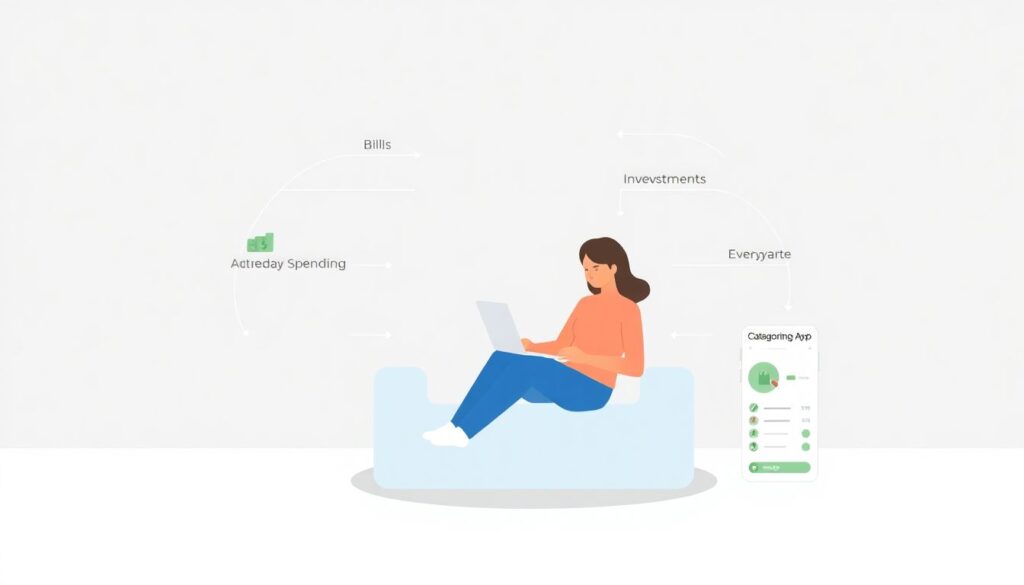
Manual discipline is overrated. Systems are better. The more your money moves itself into the right “zones,” the less willpower you need.
Practical moves:
– Set up automatic transfers to savings the day after payday
– Automate regular bills to avoid late fees
– Use your budgeting app to categorize transactions automatically (food, home, transport)
– Create a specific “home upgrades” savings pot so projects don’t blow up your month
This turns budgeting into “set and check” instead of “remember and stress.”
—
How to save money on small home expenses without feeling deprived
A lot of advice sounds like: “Just stop buying coffee and never go out.” That’s not realistic. In a small home, the better strategy is to target the most expensive square centimeters in your life – where you spend a lot but don’t get much comfort or joy.
Focus on:
– Energy efficiency: draft stoppers, LED bulbs, thick curtains can cut heating/cooling costs
– Smart storage instead of more stuff: if your closet works better, you don’t need extra furniture
– Multipurpose items: a sofa‑bed instead of sofa + guest bed, a fold‑down table instead of dining + desk
Often, the biggest savings don’t come from sacrificing comfort, but from fixing small inefficiencies that you stare at every day: a drafty window, a badly arranged kitchen that makes you order food more often, or a wardrobe you can’t navigate so you keep “needing” new clothes.
—
Case study #2: Turning chaos into a calm (and cheaper) studio
Jamal lived in a tiny studio and constantly felt like his place was “unfinished.” Every month he’d buy something to “solve” it: a side table, a lamp, another organizer. Money disappeared, but the problem stayed.
We listed his actual irritations: no place to work, constant clutter near the door, and nowhere to host a friend overnight. Instead of more random purchases, he:
– Sold two bulky chairs and a side table
– Bought one solid fold‑out table and two stackable stools
– Added a simple wall shelf and hooks near the door
Cost: less than two months of his old “random decor” habit. Result: a proper workspace, more floor space, and less mess. His monthly spending dropped simply because he stopped trying to fix problems with impulse decor buys.
—
Step 4: Plan small renovations and upgrades like mini‑projects
In a small home, even “just repainting” or “adding shelves” can get pricey if you wing it. Treat every change as a mini‑project: define the problem, budget it, then execute.
For a small house renovation on a budget, break it down:
– What exactly annoys you daily? (dark hallway, no counter space, ugly flooring)
– What’s the smallest change that would noticeably improve it?
– What’s your max budget, and how many months do you need to save it?
This turns vague “I should renovate” stress into a concrete plan like: “In three months, I’ll have $300 to repaint, add better lighting, and buy one narrow console table.”
—
Choosing wisely: cheap furniture for small apartments (that doesn’t feel cheap)
Small homes are where bad furniture choices scream the loudest. A bulky, low‑quality wardrobe can dominate a room and still not store much. When you’re hunting for cheap furniture for small apartments, aim for three things: size, function, and lifespan.
Ask yourself:
– Does it fit the scale of the room, or will it make the space feel cramped?
– Does it do at least two jobs (storage + surface, seat + storage, bed + drawers)?
– Is it sturdy enough to last 3–5 years, not 6 months?
Buying the absolute cheapest option can be expensive long‑term if it breaks, looks bad, or forces you to replace it when you move. In small spaces, fewer but better pieces almost always win.
—
Step 5: Use tech as your “money roommate”
Good budgeting apps are like a roommate who keeps an eye on the bills without nagging you. When picking among the best budgeting apps for households, especially if you share a small space with a partner or roommate, look for:
– Shared access so everyone sees the same numbers
– Real‑time sync with banks or cards
– Simple categories and easy editing
– Reminders for upcoming bills and goals
Set a 10‑minute “money check‑in” once a week. Open the app, see what’s left in each category, adjust if needed, and that’s it. No spreadsheets at 11 p.m. unless you’re into that kind of thing.
—
Case study #3: Roommates who stopped fighting about money
Two roommates, Sara and Leo, rented a compact two‑bedroom. They split rent, but everything else was chaos: groceries, cleaning products, streaming services, and endless “you owe me” messages.
They created three shared “pots” in their budgeting app:
– Shared home costs (cleaning supplies, lightbulbs, etc.)
– Shared food (only for agreed joint meals)
– Shared fun (Netflix, Spotify Family, occasional pizza night)
Each sent a fixed amount every month. If the pot was empty, they either skipped it or both agreed to top it up. Arguments disappeared, their spending turned more predictable, and they could finally plan ahead (like saving for a new sofa together).
—
Troubleshooting: when your budget keeps “breaking”
If you’ve tried budgeting and it always falls apart after a week or two, it’s usually not because you “lack discipline.” It’s more often that the plan doesn’t match your actual life in a small home.
Common problems and fixes:
– Problem: You forget to track expenses.
Fix: Switch to an app that auto‑imports transactions and just review them weekly.
– Problem: Your categories are too detailed or too vague.
Fix: Merge similar ones (e.g., “home stuff” instead of 5 separate decor categories), but keep “food” separate from “fun.”
– Problem: One category (often food or home upgrades) is always overspent.
Fix: Raise that category’s limit to something realistic, and trim where you truly care less (for many people, that’s random subscriptions or impulse decor).
Your budget is a tool, not a rulebook. If it breaks, adjust it – don’t quit.
—
How to stick with it when motivation disappears
There will be months where everything hits at once: a broken appliance, a higher utility bill, a birthday, and you feel like your budget is pointless. That’s normal. The goal isn’t perfection; it’s staying aware and making slightly better decisions than you would on autopilot.
A few ways to keep going:
– Celebrate visible wins: lower utility bills, less clutter, actually finishing a mini home project
– Take photos “before and after” of your space when you improve it on a budget
– Give yourself a small, guilt‑free “fun” budget so you don’t feel constantly restricted
When you can see and feel the results in your own four walls – a calmer bedroom, a hallway that works, a little money sitting safely in savings – it becomes easier to say no to things that used nothing but space and cash.
—
Final thoughts: small home, big control
Budgeting in a small home isn’t about suffering through a minimalist, joyless life. It’s about aligning your spending with how you actually live: your habits, your space, and your priorities. Once you see clearly where your money goes and you shape it on purpose, your home starts working for you instead of against you.
You don’t need a perfect system from day one. Start simple: track one month, set rough limits, automate what you can, and tweak as you learn. Within a few months, you’ll likely notice that you’re not just “surviving” in a small place – you’re using both your space and your budget much more effectively.