
Start With Your Real Life, Not a Fantasy Budget

Before you even think about wellness subscription boxes or downloading another meditation app subscription, you need a budget that actually fits the way you live today, not the way you wish you lived. Grab your last one to three months of bank statements, card histories, and cash notes. Highlight everything that repeats: rent or mortgage, utilities, transport, groceries, debt payments, and current subscriptions like Netflix or your fitness app subscription plan if you already have one. Your first task is just observation: where is your money already going, and which of these things you would genuinely be sad to lose? This “reality check” phase keeps you from building a perfect wellness plan on top of a totally unrealistic financial base, which is the number-one reason budgets fail in month two.
Define What “Wellness” Actually Means to You
People often jump into health and wellness subscription services because they sound wholesome, but “wellness” is personal, not a one-size-fits-all shopping list. Before adding anything to your budget, write down what you’re actually trying to improve: better sleep, less anxiety, more strength, social connection, weight management, or even just more fun movement. Maybe the best wellness subscription apps for you are not the ones Instagram pushes, but the ones that solve a specific pain point: a guided stretching program if you sit all day, a calm audio library if your brain never shuts up, or a nutrition-focused subscription if cooking and planning overwhelm you. This step keeps you from paying for a dozen half-used services that don’t match your real needs.
Put a Price Tag on Your Ideal Wellness Stack
Now, dream a little—but with numbers. Make a list of every wellness-related service that catches your eye: wellness subscription boxes with snacks or skincare, a meditation app subscription, a premium fitness app subscription plan with coaching, maybe a habit tracker or sleep app. Next to each one, write the actual monthly cost based on current offers, not guesses. Include taxes or currency conversions if applicable. Don’t worry if the total is bigger than what you can afford right now; you’re just building your “wish list stack.” Seeing the real price tags side by side helps you prioritize later and avoids the sneaky trap of “it’s only $9.99” repeated ten times, which adds up terrifyingly fast.
Pick a Clear Wellness Budget Ceiling First
Here comes the non-negotiable rule: decide how much, in total, you’re willing to spend monthly on wellness subscriptions before you choose any specific products. Look at your income, fixed costs, and savings goals. Then choose a firm percentage or number, for example 5–10% of your take-home pay or a fixed $50–$120. This becomes your “wellness envelope.” Any health and wellness subscription services you pick must fit inside this ceiling. Beginners often do the reverse—collect services first and “see what happens”—which is how people end up with overdrafts or credit card surprises. Your ceiling turns wellness from impulse purchases into intentional investments.
Prioritize by Impact, Not by Hype
Once you know your ceiling, sort your wish list by likely impact, not by how trendy or aesthetically pleasing the brand is. Ask yourself for each option: “If this worked exactly as promised, how much would it improve my life on a scale from 1 to 10?” Rate them roughly. A serious, structured fitness app subscription plan that finally gets you moving three times a week might be a “9,” while a cute candle-and-tea box might be a “4.” Also check how often you’ll realistically use it—daily, weekly, or once in a blue moon. Put high-impact, high-usage tools at the top. This prevents your budget from being eaten by pretty-but-optional extras while your core needs (stress, sleep, movement) stay unaddressed.
Build a Tiered Wellness Stack (Essentials, Boosters, Luxuries)
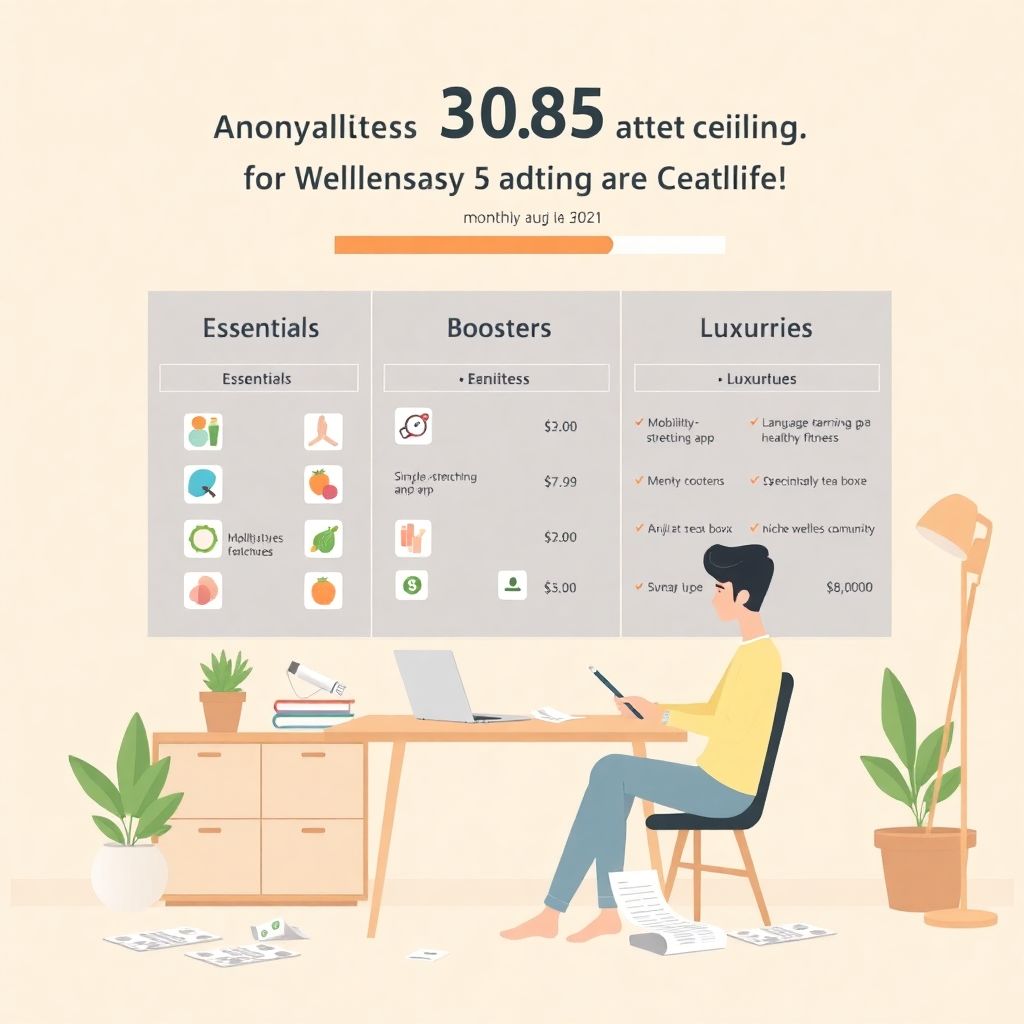
To avoid the all-or-nothing thinking that kills most budgets, break your potential subscriptions into three tiers: Essentials, Boosters, and Luxuries. Essentials support your foundation: maybe a meditation app subscription you use every evening to prevent burnout, or a no-frills workout app that gets you sweating. Boosters add targeted value, such as a focused mobility program, a language-learning app you treat as mental fitness, or occasional wellness subscription boxes for healthy snacks. Luxuries are purely nice-to-have: premium skincare boxes, specialty teas, or niche wellness communities. Start by funding the Essentials within your budget ceiling, add one Booster if there’s room, and leave Luxuries as “rotating treats” rather than permanent fixtures, which keeps your finances from being locked into non-essential spending.
Use the “One In, One Out” Rule to Keep Costs Stable
Here’s an unconventional but powerful rule: every time you want to add a new wellness subscription, something else must leave your budget. It can be another wellness service, a non-wellness subscription (like a streaming platform you seldom use), or a recurring micro-expense like delivery coffees. This “one in, one out” rule automatically caps your spending and forces you to ask, “Do I value this new thing more than the old one?” You can even rank all your recurring digital costs and promise yourself that the lowest-ranked item gets cut each time you introduce something new. This turns your budget into a dynamic system that adapts with your needs instead of an ever-expanding list of autopays.
Audit All Subscriptions for Hidden Trade-Offs

Before you assume you “can’t afford” more wellness, scan your existing recurring payments for dead weight. Many people pay for multiple overlapping services: two streaming platforms, duplicated cloud storage, rarely used learning sites, or gym memberships they haven’t visited in months. Ask yourself what you could replace with the best wellness subscription apps that you’ll actually use. For instance, if you watch two or three shows on a big streaming service but scroll through them out of habit, would you rather cancel or pause that and re-route the money toward a fitness app subscription plan that helps you move daily? Trade-offs like this don’t increase your total budget; they just redirect it toward things that upgrade your health instead of your background noise.
Set Time-Limited Experiments Instead of Permanent Commitments

Instead of telling yourself “I’ll subscribe to this forever,” reframe every new wellness service as a 30- or 60-day experiment with a scheduled review date. Put a reminder in your calendar for a week before renewal and ask three questions: Did I use it at least twice a week? Do I feel any measurable benefit (better mood, energy, sleep, strength)? Would I pay this amount again if I were starting from zero today? If the answer is no, cancel without guilt. Many health and wellness subscription services rely on the fact that people forget to cancel. You can outsmart that simply by designing experiments with clear start and end points, and refusing to roll over a paid month if you didn’t meaningfully engage with it.
Leverage Free Trials Without Getting Trapped
Free trials can be gold if you treat them like research, not like gifts. When you test the best wellness subscription apps via their trial offers, set two calendar alerts: one for halfway through the trial to ask yourself if you’re actually using it, and one a couple days before it ends to decide whether to keep or cancel. Create a simple note on your phone where you track each trial: name, start date, end date, monthly cost, and your quick impression. This transforms free trials from a sneaky onboarding funnel into your personal comparison lab. Newcomers often forget that “free for 7 days” is only worth it if they genuinely test features daily instead of promising themselves they’ll explore it “this weekend” and never do.
Blend Digital Subscriptions With Low-Cost Offline Habits
A common budgeting trap is trying to buy your entire wellness routine. Subscriptions can guide and support you, but they’re not a replacement for low-cost habits. Pair each digital service with offline behaviors that cost almost nothing. For instance, if your meditation app subscription teaches you breathing techniques, practice them during commute or short breaks without always needing the app’s audio. If a workout app gives you routines, screenshot or write down your favorite sequences and repeat them at the park or at home even if you later cancel. This way, subscriptions amplify your progress instead of becoming crutches that feel essential forever, which helps you rotate services without losing your healthy routines.
Design a “Wellness Rotation” Instead of Owning Everything at Once
Here’s a fresh approach many people overlook: rotate different wellness tools seasonally instead of stacking them. For three months, focus on mobility and meditation; next cycle, prioritize strength and nutrition; later, switch to sleep and stress management. During each rotation, you carry only the apps or wellness subscription boxes that align with that specific theme. This keeps your monthly spend steady while letting you explore a wide range of health tools across the year. You could even set up a four-season plan at the start of the year, penciling in which services you’ll fund each quarter. This prevents that bloated feeling of paying for ten solutions while barely using any of them.
Make a Simple 5-Step System You Can Repeat
To keep everything practical, here’s a straightforward sequence you can reuse whenever your life or income changes:
1. Track one to three months of spending and note all recurring payments.
2. Set a hard monthly ceiling for wellness, as either a percent of income or a fixed amount.
3. List and price all potential wellness services, then rank them by impact and realistic usage.
4. Choose a combination of Essentials and Boosters that fit under the ceiling, and apply the “one in, one out” rule for any new additions.
5. Run 30–60 day experiments for each subscription with calendar reminders to review, rotate, or cancel.
Follow this cycle instead of building your budget once and forgetting it. As your job, health, or goals change, you’ll already have a familiar method to re-balance your wellness spending without starting from scratch or falling into chaos.
Common Mistakes to Avoid When Budgeting for Wellness
Several predictable pitfalls can quietly wreck an otherwise solid plan. One is overestimating how disciplined “future you” will be; if you struggle to use a simple free app daily, paying for three premium ones won’t magically fix your consistency. Another is mixing guilt with money: some people keep a barely used fitness app subscription plan because canceling feels like admitting failure, when in reality it’s just data that this format didn’t suit them. A third trap is ignoring annual subscriptions that renew in a single painful chunk; if you choose yearly billing, consider setting aside a small monthly amount into a separate “subs fund” so the renewal doesn’t blindside you. Treat each mistake as feedback, not a moral judgment, and your budget will stay flexible instead of fragile.
Beginner-Friendly Tricks to Stay on Track
If you’re new to budgeting and wellness at the same time, simplify aggressively. Start with just one or two services that cover different needs, like a combined workout-and-habit app plus a basic meditation tool, rather than five ultra-specific subscriptions. Use visual cues: a sticky note on your laptop listing your active wellness subscriptions and their total monthly cost; if that number ever makes you uncomfortable, it’s time to prune. Try a weekly “money-and-body check-in” where you spend ten minutes reviewing both how you feel physically and how your spending looks; this connects your bank account to your actual well-being, so you stop treating them like separate worlds. Over time, these small rituals make your budget feel like part of your self-care routine instead of a set of boring rules.